

Guide
Where locals actually eat in Pattaya
Markets, small kitchens and one seafood ritual that has nothing to do with the tourist strip. What Thai residents eat and where.
7 min readUpdated
Good to know
- What to bring
- Bring cash; markets and small kitchens are cash businesses. Take cash in small notes to the morning market.
- Good to know
- Walk two streets back from the beach; almost every price in Pattaya is a function of distance from the sea. Order rice separately, and use a fork to push food onto your spoon rather than eating with the fork.
- Opening hours
- Small kitchens often open for lunch, close in the afternoon and reopen in the evening. Markets are late afternoon onwards; nothing local runs continuously.
- Who it suits
- Thailand is one of the easiest places in the world to eat alone, and Pattaya especially so. Small kitchens and night markets are built for single diners.
There are two Pattayas eating dinner tonight. One is on Beach Road paying tourist prices for a laminated menu with photographs on it. The other is at a plastic table under a strip light eating something considerably better for a fraction of the money.
The second one is not hidden. It is just not signposted in English.
This is how to find it.
Start with the markets
Pattaya's night markets are where most residents eat several times a week, and the food sections are far better than the souvenir stalls suggest.
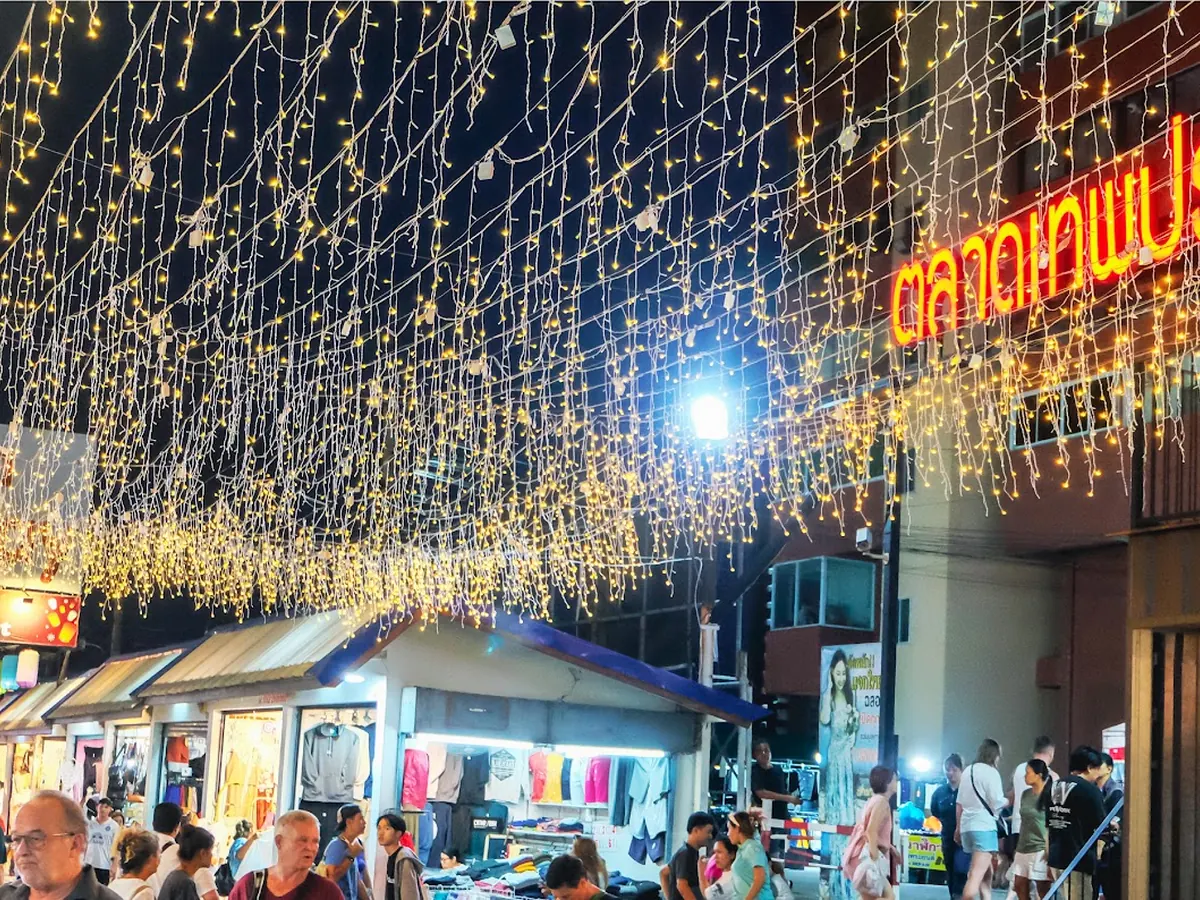
Thepprasit Night Market is the biggest. The clothing and souvenir stalls are much like everywhere else in Thailand, but the food court is enormous and varied enough that a group with completely different tastes can all eat well. It is significantly bigger at the weekend than midweek. Bring cash.
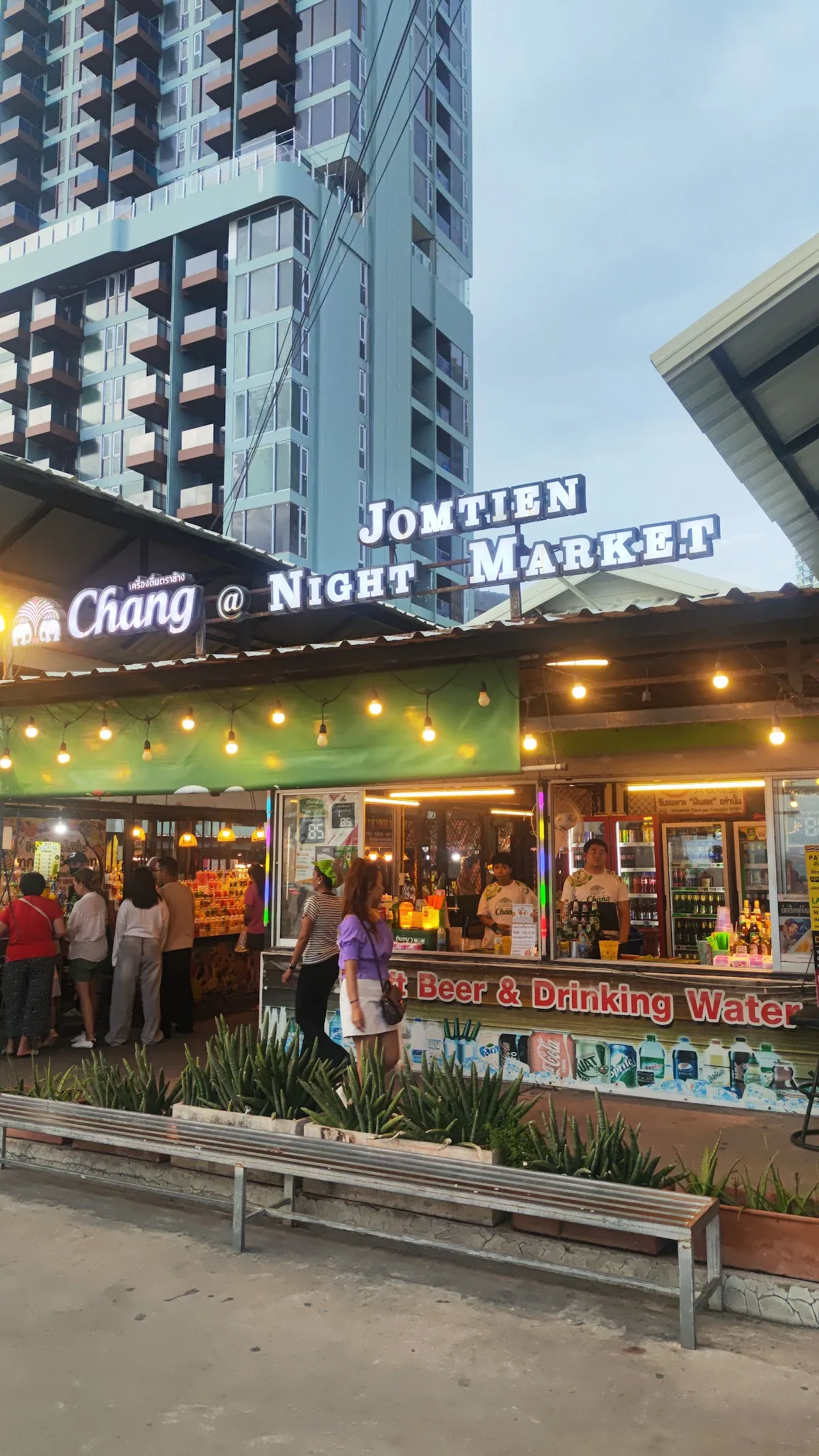
Jomtien Night Market is the better one to take a family to. Across the road from the beach, open air, calmer, and with a crowd that skews local and residential rather than tour group. The food runs from Thai grills and seafood through Indian, Mexican and burgers, with fruit smoothies at prices that look like a mistake. Seating is communal and finding a table at peak takes patience.
The market at Wat Chai Mongkron is the one most visitors never find, which is exactly why it is worth going to. It runs in the grounds of a working temple in South Pattaya, the crowd is overwhelmingly Thai, and the food and clothing are priced for that crowd rather than for you. Come in the daytime for the temple itself, which is quiet, free and genuinely beautiful, and come back in the evening for the market.
The seafood ritual
Lan Pho Na Kluea Market is the single most direct route to good seafood in Pattaya, and it works in a way that surprises people the first time.
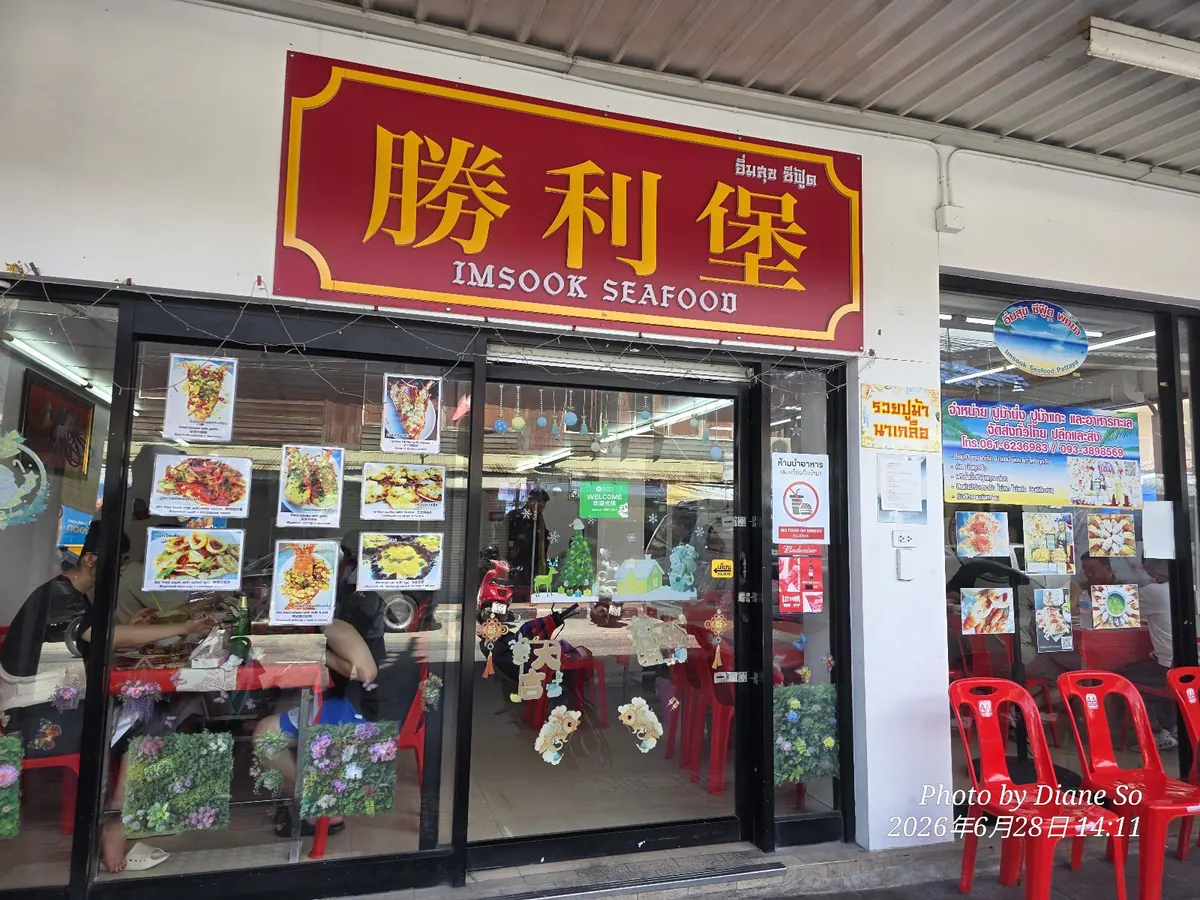
You walk through rows of stalls selling prawns, crab, squid, shellfish and whatever came in that morning. You buy what you want, raw, by weight. Then you take it to one of the small kitchens at the far end of the market, and they cook it for you for a fee.
A few things make the difference between doing this well and doing it badly. Prices are quoted to tourists, so compare several stalls and hold out rather than accepting the first number. Dipping sauces are sold separately and you want them. The market closes in the early evening, so this is a lunch or late-afternoon plan rather than a dinner one. And parking is genuinely difficult in anything larger than a small car.
Get it right and you will eat better seafood for less than anywhere on the coast.
The proper seafood restaurant
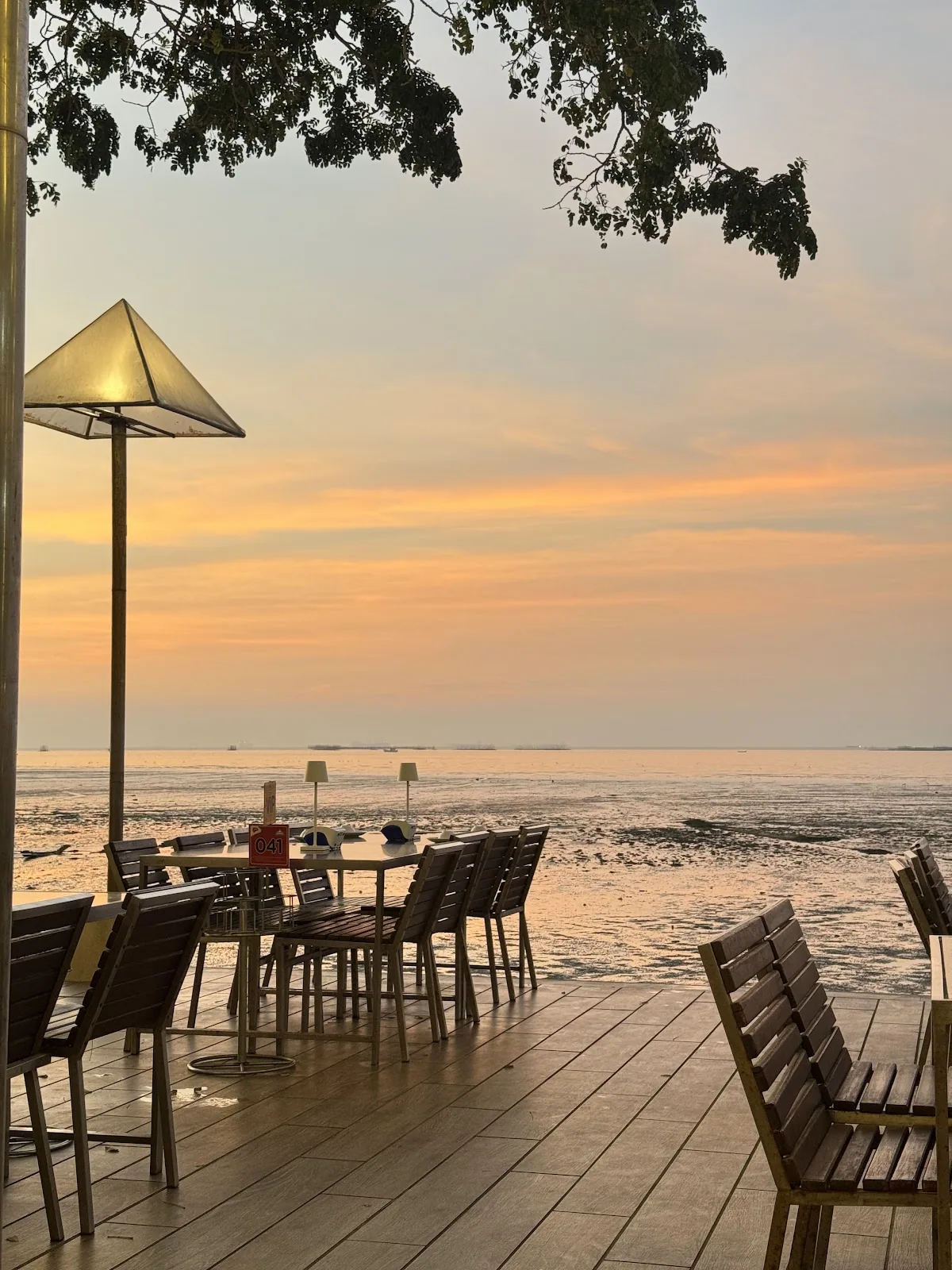
If you want the same food without the shopping, Moom Aroi in Naklua is the institution. Hundreds of tables at the water's edge at the northern end of Naklua Road, a menu built on the local catch, and a sizzling oyster omelette that people drive down from Bangkok for.
It is not cheap and portions run modest against the price. What you are paying for is the setting and the consistency, and enough people make that trade that the place has been full for years. Big groups are easy here. Arrive around sunset.
The small kitchens
This is where the real value is, and where a little courage pays off.
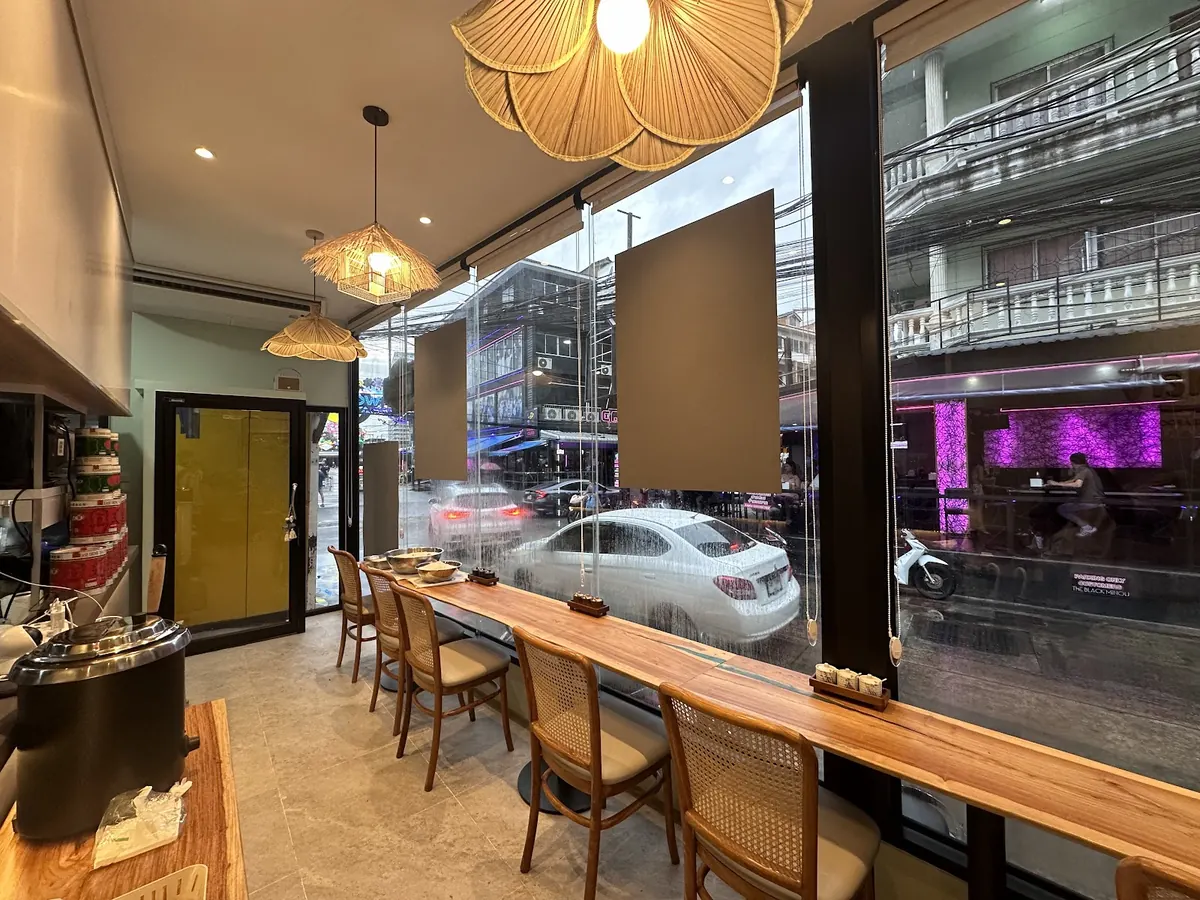
Pad Lay off Soi Buakhao is the model. A tiny room with barely any tables, no atmosphere to speak of, and a kitchen turning out seafood-heavy Thai food with more ambition than the setting suggests. River prawns, mussels, squid, scallops and crab in dishes you will not find on Beach Road. Generous portions, fast service, and the complete absence of decor is entirely the point.
Places like this exist all over the city. The signals to look for are consistent: mostly Thai customers, a short menu or no written menu at all, a single cook who has been doing the same dishes for years, and a room that has had no money spent on it.
How to order without Thai
You do not need the language, but a few habits help enormously.
Point at what other people are eating. This works everywhere and nobody minds.
Learn four dishes by name. Pad krapow (holy basil stir-fry, usually with pork or chicken, with a fried egg on top if you ask for kai dao), som tam (green papaya salad), tom yum (hot and sour soup), khao man gai (poached chicken rice). Those four will feed you well almost anywhere.
Say "mai phet" for not spicy, and understand that this is a negotiation rather than an instruction. Thai "not spicy" is still spicy. Phet nit noi means a little spicy and is often the more useful phrase.
Expect dishes to arrive when they are ready, not together. Thai meals are shared and sequential rather than plated per person. Order for the table.
Where Thai people go for a proper dinner
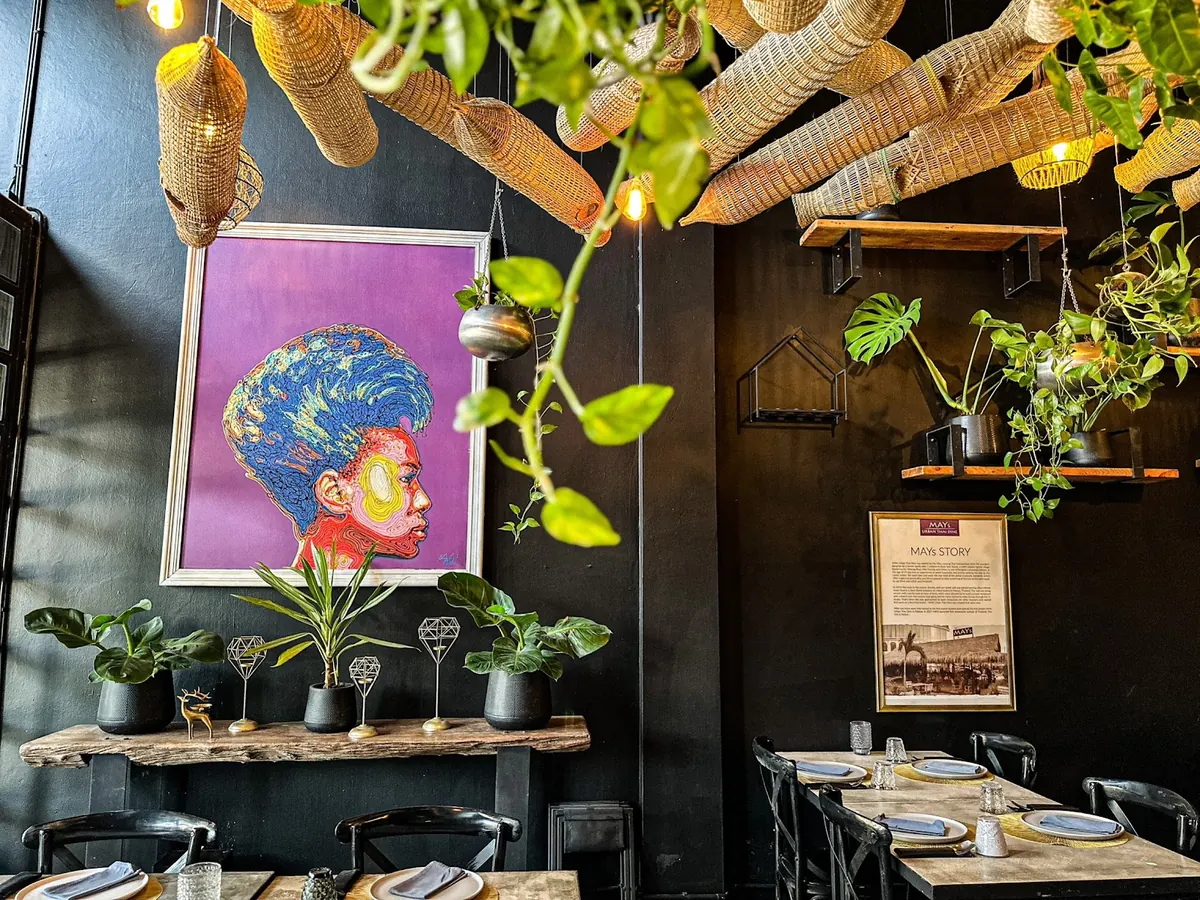
Not every local meal is a plastic stool. When Thai residents go out for an occasion, they go somewhere like MAYs, which does refined Thai cooking in a room full of orchids, with a kitchen that will genuinely adapt dishes rather than nodding at the request. The fried sea bass in red curry is the dish to build a table around, and the salads, particularly banana flower and pomelo, are where the kitchen shows what it can do.
This is Thai food taken seriously rather than Thai food made safe for tourists, and it is a useful correction to the idea that local eating means cheap eating.
Practical notes
Cash. Markets and small kitchens are cash businesses. Card acceptance is improving but do not rely on it.
Timing. Small kitchens often open for lunch, close in the afternoon and reopen in the evening. Markets are late afternoon onwards. Nothing local runs continuously.
Hygiene. High-turnover stalls with a queue are safer than empty ones with the same food sitting out. Follow the crowd, and prefer things cooked in front of you.
Ice is fine. The commercially produced ice used almost everywhere in Thailand is made from treated water. This worries visitors more than it should.
Tipping is not expected at markets or small kitchens. Rounding up is normal and appreciated.
The one habit that changes everything
Walk two streets back from the beach.
Almost every price in Pattaya is a function of distance from the sea, and almost every kitchen that survives on repeat local custom is inland. Two streets is usually enough to move from a tourist menu to a local one, and the food improves as the price falls.
That single habit will do more for how you eat here than any list of restaurant names.
The morning market, which almost nobody visits
Thai food shopping happens early, and the wet markets that supply every small kitchen in the city are open from before dawn.
They are not tourist attractions and there is nothing laid on for visitors, which is exactly the appeal. You get produce nobody puts on a tourist menu, prepared food sold by the bag, curries ladled into plastic pouches, sticky rice in banana leaf, grilled pork skewers, and fruit at a fraction of supermarket prices.
Go early, take cash in small notes, and buy the way Thai customers do: a bag of this, a bag of that, eaten at home or in a park rather than at a table.
If you want to understand how the city actually feeds itself, this is where it happens.
Regional cooking worth seeking out
Thai food is not one cuisine, and Pattaya has cooks from every region.
Isaan food, from the northeast, is the most visible: som tam, grilled chicken, larb, sticky rice, and the sour and fermented flavours that go with them. It is also the spiciest, and the most common street food in the city because so many of Pattaya's workers come from the northeast.
Southern Thai cooking is hotter still, with more turmeric and coconut, and shows up in curry shops rather than restaurants.
Central Thai is what most visitors think of as Thai food: the coconut curries, pad thai, tom yum.
Chinese-Thai cooking is everywhere and often unnoticed, particularly in the noodle shops and the khao man gai stalls.
Asking for the regional version of something rather than the default is one of the quickest ways to eat better here.
Two habits that mark you as a regular
Order rice separately. Dishes are shared, rice is per person. A table ordering one dish each with rice on the side is ordering the way Thai people do.
Do not use a fork to eat. The fork pushes food onto the spoon; the spoon goes in the mouth. Chopsticks are for noodles. This is a small thing that people notice.
Eating alone, which nobody writes about
Thailand is one of the easiest places in the world to eat alone, and Pattaya especially so.
Small kitchens are built for single diners: one dish, one plate of rice, ten minutes, no ceremony. Nobody looks twice, nobody seats you badly, and nobody hovers. Noodle shops in particular are designed around solo customers eating quickly at a counter.
Night markets work the same way. Buy from three stalls, sit at a communal table, and eat what you like without negotiating with anyone about where to go.
This is a genuine advantage over the tourist restaurants, where a table for one is treated as an inconvenience.
Dishes worth learning by sight
Beyond the four names everyone recommends, these turn up constantly and are worth recognising.
Khao kha moo, slow-braised pork leg over rice with pickled greens and a boiled egg. Usually sold from a cart with a distinctive glass case.
Kuay teow, noodle soup, ordered by noodle type and broth. The default lunch of working Thailand.
Moo ping, grilled pork skewers, sold from charcoal grills in the morning and evening, usually with sticky rice.
Gaeng som, a sour orange curry, sharper and less coconut-heavy than the curries tourists know.
Khanom krok, small coconut pancakes cooked in a dimpled pan, sold in the afternoon.
Point at any of these and you will eat well.
Common questions
- What are some of the popular night markets in Pattaya?
- Thepprasit Night Market is the largest, Jomtien Night Market is family-friendly and across from the beach, and the market at Wat Chai Mongkron is in South Pattaya and popular with locals.
- How does the seafood ritual at Lan Pho Na Kluea Market work?
- At Lan Pho Na Kluea Market, you buy fresh, raw seafood from stalls, then take it to small kitchens at the end of the market who will cook it for you for a fee.
- What is the key to finding good local food in Pattaya?
- Walking two streets back from the beach significantly improves food quality and lowers prices, as many kitchens catering to locals are located inland.
Places in this guide
restaurants
Pad Lay
Ambitious Thai stir-fries in a room with barely any tables.
hidden-gems
Lan Pho Na Kluea Market
Buy your seafood at the market, then pay someone at the back to cook it.

attractions
Wat Chai Mongkron
A working temple in the middle of the city, with a night market attached.
attractions
Thepprasit Night Market
The biggest night market in Pattaya, and mostly about the food.
attractions
Jomtien Night Market
The night market to take a family to.
restaurants
Moom Aroi Na Kluea
The seafood restaurant everyone means when they say seafood restaurant.
restaurants
MAYs Pattaya
Thai cooking worth dressing up for.
Related guides
- ItinerariesPattaya in 48 hoursA first visit, planned around the two things this coast does better than anywhere near it: the water offshore and the light at sunset.
- Things to DoShopping in Pattaya: malls, markets and what is actually worth buyingTwo large malls, several night markets, and a clear-eyed view of what is worth your money and what is a mark-up on something you can buy anywhere.
- Trip PlanningPattaya's tourist traps, honestly assessedWhich of the city's famous attractions are worth the money, which are not, and which you should avoid for reasons beyond value.
Browse every topic in our Pattaya guides, or ask the Pattaya AI Guide about anything in this guide.