

Guide
How Pattaya became Pattaya
A fishing village, an American war, and sixty years of unplanned growth. The story explains almost everything about the city you see today.
8 min readUpdated
Good to know
- Getting there
- U-Tapao, the airport south of the city, was originally a major American air base during the Vietnam War and now handles commercial flights.
- Getting around
- Second Road and Third Road are named for the order they were built, running parallel to Beach Road as the city expanded away from the sea.
- Who it suits
- The city serves many groups simultaneously; Jomtien is a family beach resort, the inland area is a golf destination, and there is a large expat community.
- Good to know
- 'The Darkside' refers to East Pattaya, so named because the area across Sukhumvit road was historically unlit, not because it is sinister.
Almost everything people find confusing about Pattaya makes sense once you know how it got here. The city is not badly planned so much as barely planned at all, having grown from a fishing village to a metropolis of hundreds of thousands in roughly sixty years, driven by forces that had nothing to do with what it is now.
This is the short version of a long story.
Before anything happened
For most of its existence, this stretch of coast was quiet. A crescent bay facing west, backed by low hills, with a scattering of fishing settlements along it. The people here fished, farmed a little inland, and traded with the larger towns along the Eastern Seaboard.
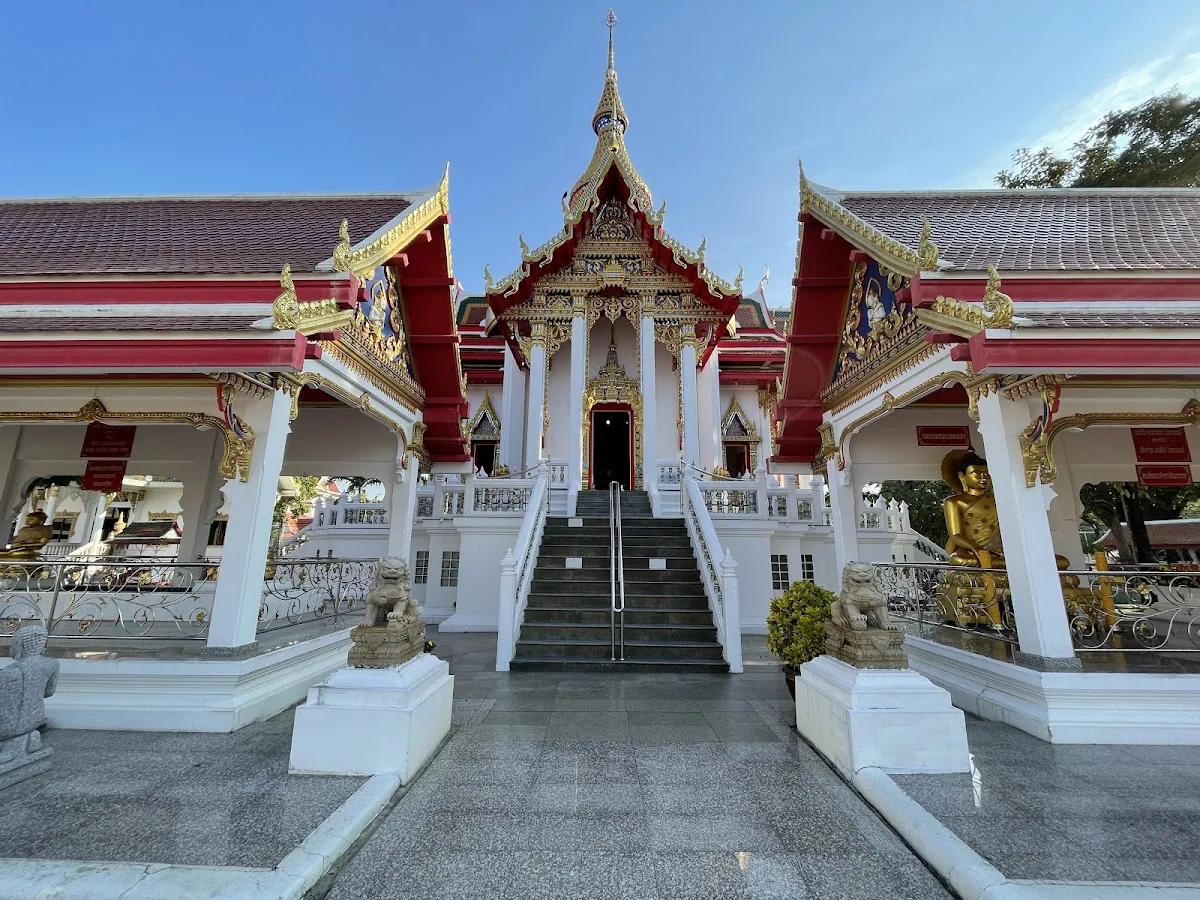
You can still see traces of that Pattaya if you look. Wat Chai Mongkron in what is now South Pattaya was the village temple and remains a working neighbourhood temple, largely untouched by everything that happened around it. Lan Pho market in Naklua still sells the day's catch the way it always did, and the small kitchens at the back will cook it for you.
The name itself is generally traced to a much older episode, connected with an army that camped in the area centuries ago. Accounts of the etymology differ, and it is one of those origin stories where the versions do not entirely agree.
The moment it changed
The conventional starting point is 1959, when a group of American servicemen stationed in Thailand travelled down from a base inland and spent a weekend on the beach here.
Whatever the precise details, the pattern that followed is not in dispute. Word spread among American personnel that there was an empty, attractive beach within reach. Through the 1960s, as the American military presence in Thailand expanded significantly during the Vietnam War, Pattaya became a rest and recreation destination for servicemen. U-Tapao, the air base south of the city that now handles commercial flights, was a major American facility.
An economy grew to serve them, and it grew fast. Bars, hotels, restaurants and the entertainment industry that Pattaya is still known for all date from this period. A fishing village acquired, within about a decade, the infrastructure of a resort town and the reputation that came with it.
What happened when the Americans left
The American withdrawal in the mid-1970s should logically have ended it. It did not, and understanding why explains the modern city.
By then Pattaya had hotels, an airport nearby, a road to Bangkok, and forty years before mass tourism would reach most of Thailand. What it had built for one market turned out to work for another. European package tourists arrived through the late 1970s and 1980s, followed by Russians in large numbers from the 1990s, then Chinese and Indian visitors more recently.
Each wave left a mark. Whole streets have Cyrillic signage. Restaurants serve German, Scandinavian, Russian and Indian food to a standard you would not expect on a Thai beach. The remarkable mix of cuisines here is a direct consequence of the remarkable mix of people who came and, in many cases, stayed.
The building boom
The other thing that arrived was concrete.
From the 1990s onward, Pattaya built upward and outward with very little coordination. Condominium towers went up along the beach and across the hills, residential estates spread east across what had been farmland, and the population grew far beyond what the original infrastructure was designed for.
This is why the city looks the way it does: a working city that grew too fast rather than a resort that was designed. It is also why drainage struggles in heavy rain, why the traffic on Sukhumvit is what it is, and why the beach and the buildings behind it feel like two unrelated projects.
The east side, around Lake Mabprachan, is entirely a product of this era. Twenty-five years ago it was farmland. It is now where a large share of the city's residents live.
The attempts to change direction
Pattaya has spent thirty years trying to broaden what it is, with mixed but real results.
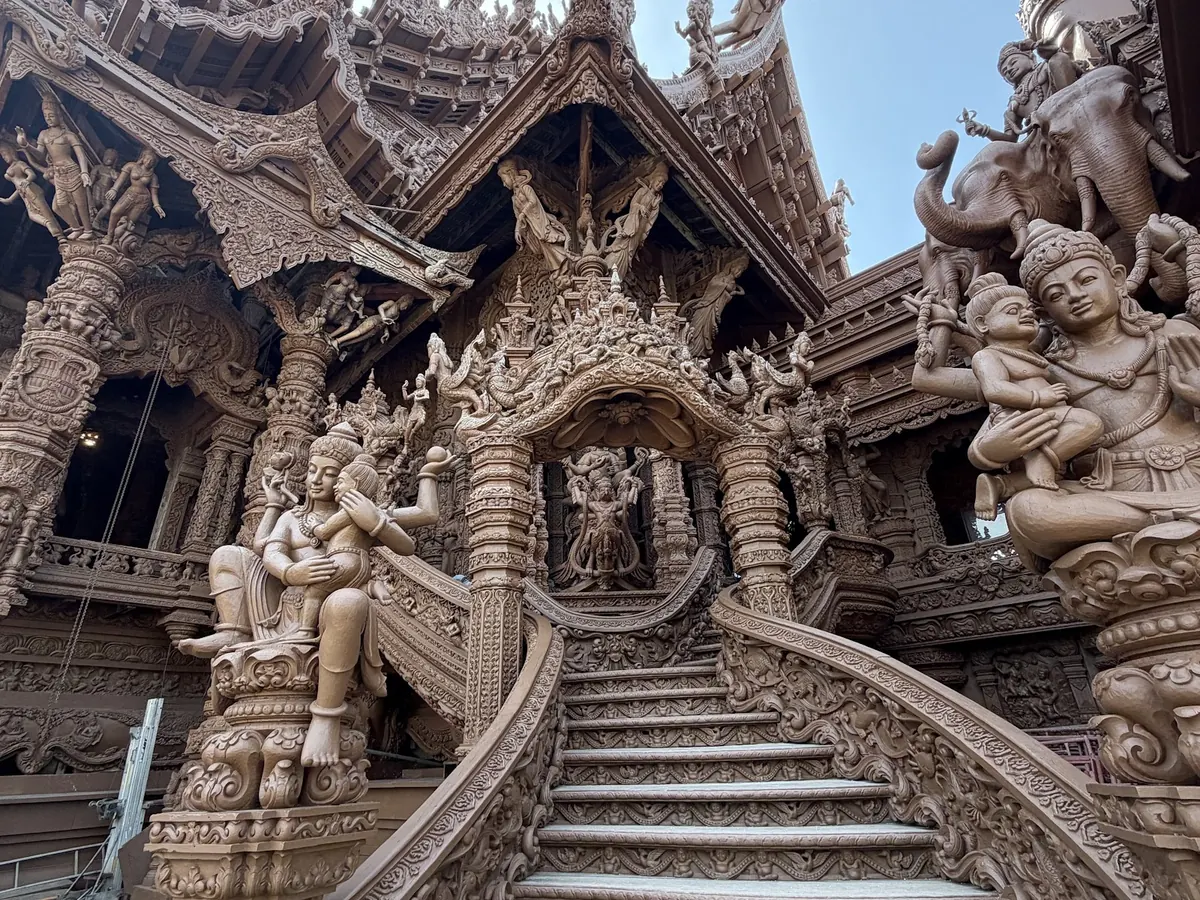
The golf industry arrived and grew into one of the densest concentrations of courses in Asia. Attractions were built inland to draw families: Nong Nooch was developed as a botanical garden from the 1980s and is now genuinely world-class. The Sanctuary of Truth in Naklua, begun in the 1980s and still being carved, is one of the more remarkable buildings in Southeast Asia and exists as a deliberate act of cultural ambition.
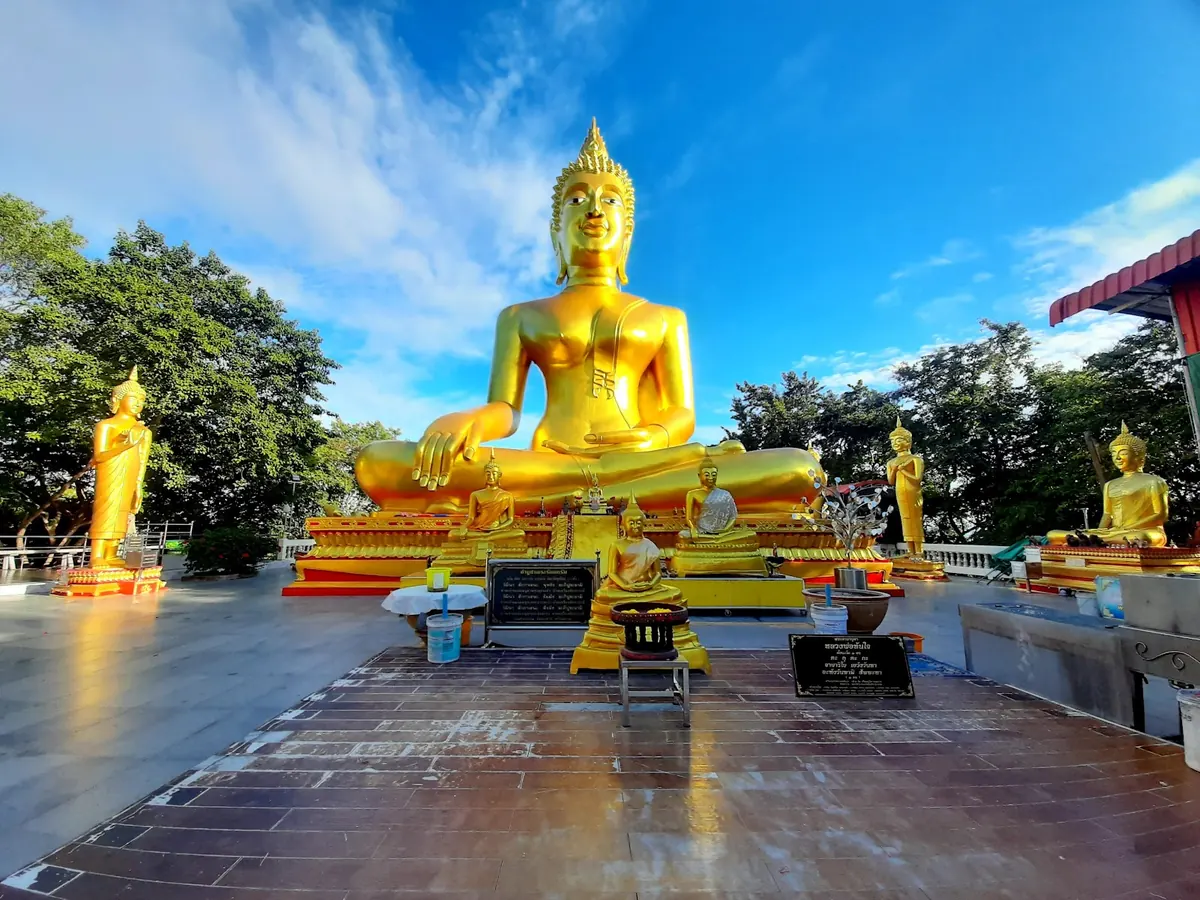
Wat Phra Yai on Pratumnak, with its Big Buddha and the view across the bay, became a fixed point for visitors who wanted something other than the beach.
Beach renourishment projects have widened Pattaya Beach. Infrastructure investment has continued. The Eastern Economic Corridor has brought industry, business travel and a very different kind of visitor to the wider region.
None of this erased the old reputation, and it was never going to. But it did mean the city acquired several parallel identities, and it now operates as all of them at once.
Pattaya today
That history explains the thing visitors find hardest to reconcile: that this is several cities occupying the same space.
There is a nightlife district, geographically small and internationally famous. There is a family beach resort in Jomtien. There is a golf destination inland. There is a retirement and expat community of considerable size. There is a Thai weekend-break town that Bangkok families have used for decades. And underneath all of it there is still a working Thai city where most of the population has nothing to do with tourism at all.
These coexist without much overlap. It is entirely possible to spend a fortnight here and encounter only one of them, which is why accounts of Pattaya vary so wildly depending on who is describing it.
Where to see the history
Wat Chai Mongkron in South Pattaya, the old village temple, quiet in the daytime and surrounded by a night market in the evening.
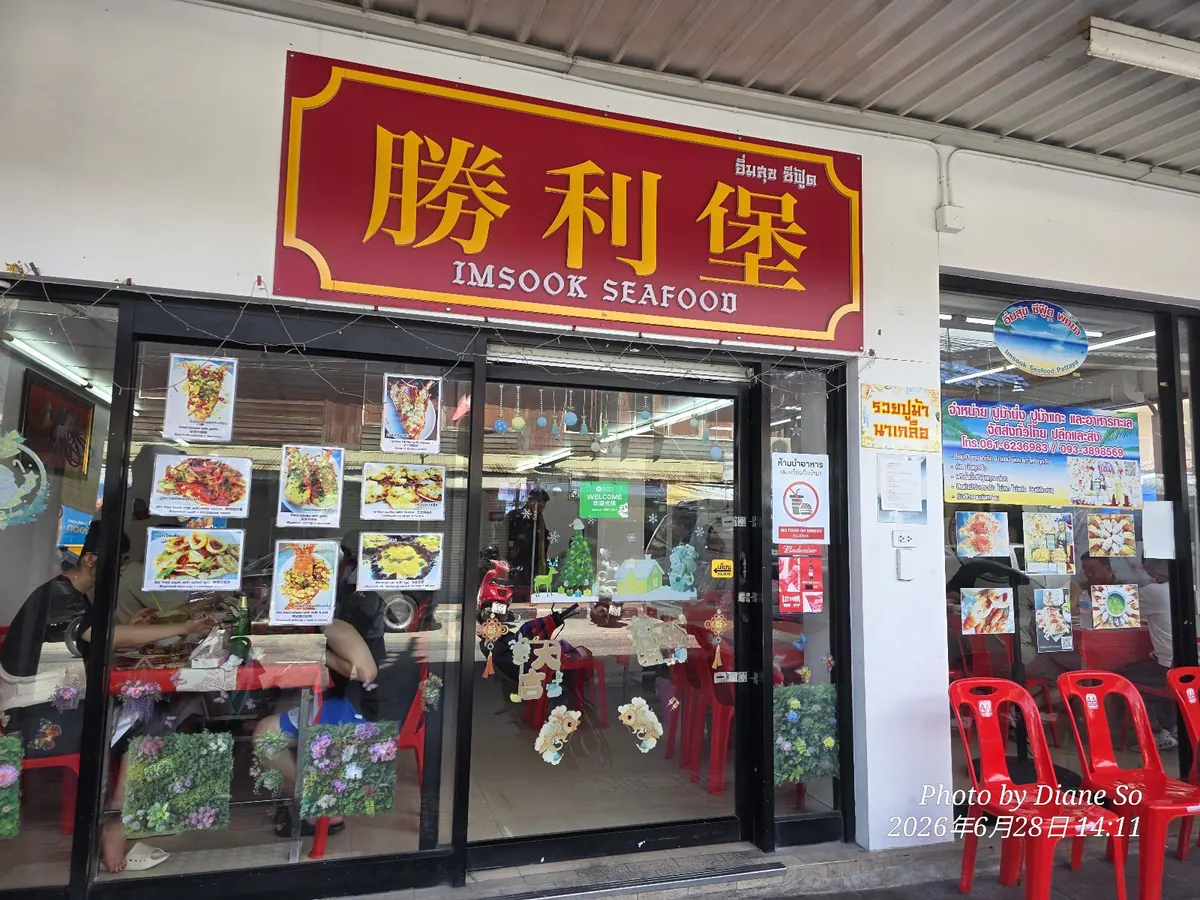
Lan Pho market in Naklua, where the fishing economy still functions much as it did.
Naklua generally, which retains more of the pre-boom character than anywhere else on the coast.
The Sanctuary of Truth, which is not old but is a deliberate statement about Thai and Asian religious tradition, still under construction after decades.
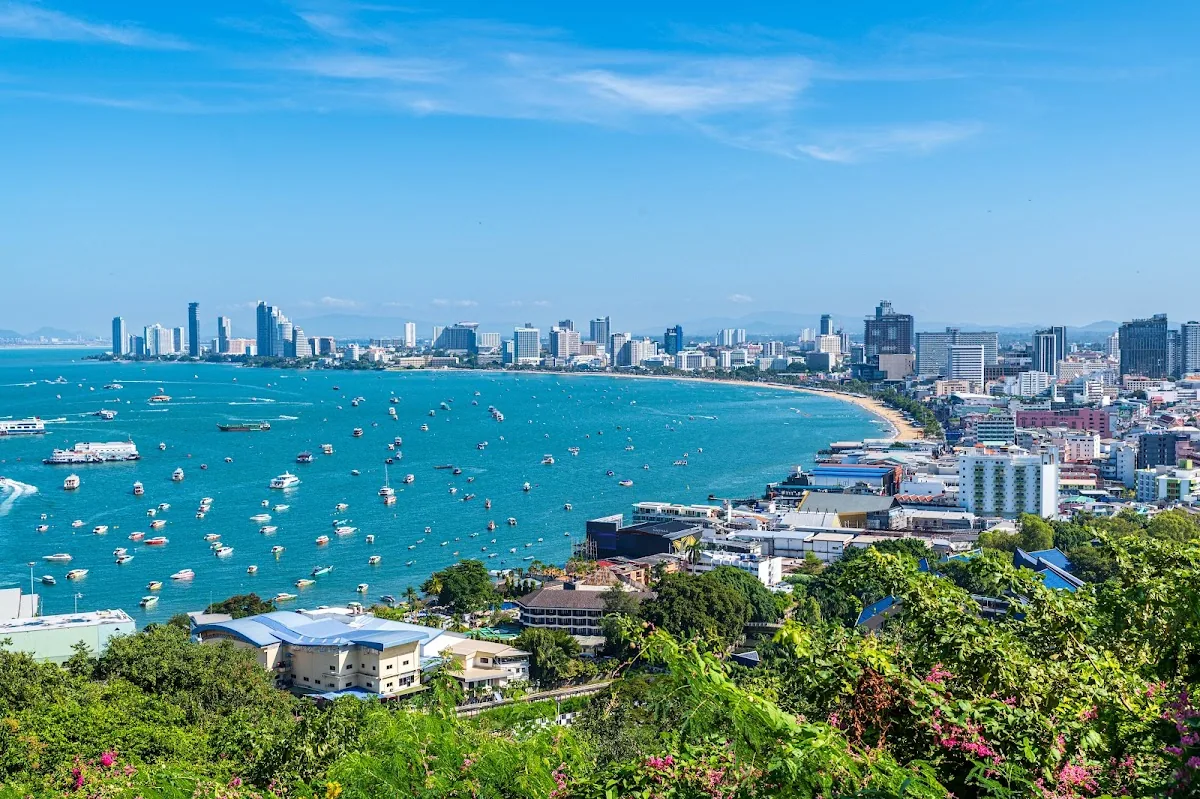
Phra Tamnak Viewpoint, where you can see the whole thing at once: the bay that drew the first visitors, the towers that followed, and the hills where the city spread when it ran out of coast.
Why it matters
Knowing this changes how the city reads.
The chaotic street layout is not bad design, it is the absence of design. The extraordinary range of restaurants is a record of migration. The gap between the beachfront and the neighbourhoods two streets back is the gap between what was built for visitors and what was built for residents.
And the reputation, which is real and which the city has not shaken, is a sixty-year-old inheritance from a war that ended before most of today's visitors were born.
The names you will hear
A few pieces of local terminology whose origins are historical and which will otherwise puzzle you.
The Darkside refers to East Pattaya, inland across Sukhumvit. It has nothing to do with anything sinister and everything to do with the area historically being unlit, undeveloped and on the far side of the main road from the coast.
Second Road and Third Road are exactly what they sound like: the roads built parallel to Beach Road as the city expanded away from the water. Their names are a record of the order in which they appeared.
Walking Street was, before it was pedestrianised in the evenings, simply a road at the southern end of the bay.
Naklua, at the northern end, means something close to "salt field", a reference to the salt production that once happened along this coast.
Bali Hai, the pier at the southern end where the island ferries leave, is a mid-century resort name rather than anything indigenous, and it tells you exactly which era named it.
What has changed in the last decade
Anyone returning after ten years away notices three things.
The east side has become a city. Areas that were farmland and scattered housing around Lake Mabprachan now have restaurants, bars, schools and a substantial residential population.
The visitor mix has shifted again. Russian numbers changed with the geopolitical situation, Chinese and Indian arrivals grew substantially, and the Middle Eastern market has become visible. Each has left a mark on signage, food and hotel offerings.
The beach itself has been rebuilt. A major renourishment project widened Pattaya Beach considerably, changing the look of the seafront for the first time in decades.
The nightlife district, meanwhile, is roughly where it was. It has contracted slightly in some places and shifted in others, but its geography is remarkably stable.
Reading the city today
Once you know the history, the layout stops being confusing.
Beach Road is the oldest strip and reflects the earliest phase. Second and Third Roads mark the first expansion inland. The condominium towers date from the 1990s onward. The east side is entirely post-2000. And the temples and markets scattered through all of it are the parts that were here before anything else, still functioning much as they always did.
The city is legible as a set of layers, and each one corresponds to a decade.
Common questions
- What historical sites in Pattaya can I visit that show its origins?
- You can visit Wat Chai Mongkron in South Pattaya, which was the village temple. Lan Pho market in Naklua also sells the day's catch as it traditionally did.
- How did Pattaya transition from a fishing village to a major tourist destination?
- Pattaya transitioned after American servicemen on leave discovered its beaches in 1959. This led to rapid development of infrastructure for recreation during the Vietnam War, which later attracted European, Russian, Chinese, and Indian tourists.
- What is the 'Darkside' in Pattaya and why is it called that?
- The 'Darkside' refers to East Pattaya, inland across Sukhumvit. It is called that because historically it was unlit, undeveloped, and on the far side of the main road from the coast, not due to anything sinister.
Places in this guide
attractions
Wat Chai Mongkron
A working temple in the middle of the city, with a night market attached.
hidden-gems
Lan Pho Na Kluea Market
Buy your seafood at the market, then pay someone at the back to cook it.
attractions
Sanctuary of Truth
A hundred metres of hand-carved teak, still unfinished after decades.
attractions
Wat Phra Yai (Big Buddha)
The Big Buddha, free entry, and the best cheap view in the city.
restaurants
Moom Aroi Na Kluea
The seafood restaurant everyone means when they say seafood restaurant.
attractions
Phra Tamnak Viewpoint
The Pattaya City sign, the whole bay, and no entrance fee.
Related guides
- ItinerariesPattaya in 48 hoursA first visit, planned around the two things this coast does better than anywhere near it: the water offshore and the light at sunset.
- Culture & HistoryThai etiquette: what actually mattersMost of what visitors worry about is fine. A smaller number of things genuinely cause offence, and one of them is a criminal offence.
- Trip PlanningPattaya's tourist traps, honestly assessedWhich of the city's famous attractions are worth the money, which are not, and which you should avoid for reasons beyond value.
Browse every topic in our Pattaya guides, or ask the Pattaya AI Guide about anything in this guide.