

Guide
When to visit Pattaya: seasons, monsoon and heat
Three seasons, not four, and the wet one is nowhere near as bad as its name. How to pick your month.
8 min readUpdated
Good to know
- Best time
- January has the best weather; September offers the best value. November or late October provide the best compromise.
- Who it suits
- The cool season is best for anyone who can travel then, for beach days, golf, and walking. The wet season suits those seeking value, quiet, and photography.
- What to bring
- All year, pack high-factor sunscreen, a hat, sunglasses, mosquito repellent, and lightweight clothing. In the wet season, a light rain jacket and sandals that survive being soaked are useful.
- Good to know
- Pattaya floods during heavy rain, making roads impassable in parts and ride-hailing availability collapse. Do not plan to travel to the airport during or immediately after a major storm without a large margin.
Thailand has three seasons rather than four, and on this coast they are best understood as cool, hot, and wet. None of them is cold by any reasonable definition, and the wet one is far less wet than the word monsoon implies.
Picking the right month is mostly a question of what you are trading: comfort against cost, and crowds against rain.
Cool season, roughly November to February
The best weather of the year and the reason this is high season.
Daytime temperatures are warm rather than punishing, humidity drops noticeably, the sea is calm and clear, and rain is infrequent. Evenings are genuinely pleasant, which is the thing that separates this season from the rest: you can sit outside after dark without the air feeling like a wet towel.
It is also when everything costs the most and everywhere is busiest. Hotels book out, particularly over Christmas and New Year, and the ferries to Koh Larn run full. The city is at its most crowded, and prices reflect it.
Best for: anyone who can travel then. Beach days, golf, walking, sitting outside.
Worst for: budget, and anyone who dislikes crowds.
Book ahead, especially over the New Year period, when this coast fills up entirely.
Hot season, roughly March to May
The stretch that catches people out.
Temperatures climb through March and peak in April, and the humidity comes with them. Midday becomes genuinely difficult for outdoor activity, and the heat does not release much overnight. April is usually the hardest month of the year.
The sea stays calm and clear, so beach days work if you plan them around the sun rather than through it. Early mornings and late afternoons are perfectly good. The middle of the day is for air conditioning.
Songkran, Thai New Year, falls in April and turns the country into a nationwide water fight for several days. In Pattaya it runs longer than in most places, with the city's main celebration falling later in the month than the national dates. It is genuinely enjoyable and completely unavoidable if you are here: expect to be soaked walking down any street, and expect roads and transport to be chaotic.
Best for: anyone who wants the sea calm and does not mind organising the day around the heat. Songkran, if you want the experience.
Worst for: walking tours, golf in the middle of the day, and anyone who struggles in heat.
Wet season, roughly June to October
The season with the reputation problem.
Monsoon on this coast does not mean days of continuous rain. It means heavy, dramatic afternoon storms that arrive fast, drop a great deal of water in an hour or two, and clear. Mornings are frequently bright. Plenty of days have no rain at all.
What it does mean is that you cannot rely on an afternoon. Plan the beach, the island or the garden for the morning, and have an indoor option for two until five.
The sea gets rougher and water clarity drops, particularly after heavy rain. Ferry services to Koh Larn are occasionally suspended in bad conditions, which is worth knowing if you are building a day around them.
The upside is substantial. Prices fall sharply, the city empties, the landscape is green, and the sunsets are the best of the year because broken cloud gives the light something to work with. Many long-term residents prefer these months.
Best for: value, quiet, photography, and anyone flexible about their days.
Worst for: a short trip where every day counts, and anyone set on a fixed beach schedule.
September and October are typically the wettest.
Flooding, honestly
Pattaya floods. It is worth saying plainly rather than discovering it.
Heavy rain overwhelms the drainage in parts of the city, particularly around lower-lying sections of the central area and along some of the main roads. Water can rise quickly, and it drains slowly. It is usually a matter of hours rather than days.
The practical consequences are ordinary rather than dramatic. Roads become impassable in places. A ten-minute journey becomes forty. Ride-hailing availability collapses exactly when everyone wants it. Shops put boards up and carry on.
Two pieces of advice. If you have a scooter, park it: riding through standing water of unknown depth on unfamiliar roads is a bad idea. And do not plan to travel to the airport during or immediately after a major storm without a large margin.
Month by month, briefly
November Excellent. Season starting, weather turning, prices not yet at peak.
December Excellent weather, peak crowds and prices from mid-month.
January Arguably the best month. Cool, dry, and the New Year crush has passed.
February Very good, warming toward the end.
March Hot and getting hotter. Still good for the sea.
April The hottest month, and Songkran. Come for the festival or avoid it entirely.
May Hot, with the first storms arriving. Prices starting to drop.
June Wet season proper, but plenty of dry mornings. Good value.
July Similar. Green, quiet, cheap.
August Wet, and one of the quietest months.
September Usually the wettest. The trade-off is at its most favourable on price.
October Wet early, improving late. The end of the month can be excellent.
Working around the weather
Do the outdoor thing first. Whatever the season, mornings are better: cooler, clearer, and less crowded. The island, the beach, the gardens, the viewpoint, a round of golf.
Have an indoor fallback every day. Both malls, the museums, a long lunch, a spa. Terminal 21 is the default for a reason.
Watch the sky at four. In the wet season, the hour before a storm is usually obvious.
Sunsets are best when there is cloud. A completely clear sky produces a plain sunset; a broken one is spectacular. Horizon Rooftop and the Phra Tamnak Viewpoint are both better in the wet season than the dry one.
The sun is strong all year. The sea breeze disguises it, and the cool season catches people out precisely because it does not feel hot.
The short answer
Best weather: January.
Best value: September.
Best compromise: November or late October.
Avoid if you dislike heat: April.
Avoid if you need certainty: September, if a wet afternoon would ruin a short trip.
And whatever month you choose, plan the day around the middle hours rather than through them. That single habit matters more than the season.
Festivals and events worth timing around
Dates for most Thai festivals follow the lunar calendar and shift each year, so check before booking.
Songkran, in April, is the big one. Thai New Year, celebrated with a nationwide water fight that in Pattaya runs longer than almost anywhere, with the city's main day falling later in the month than the national holiday. Genuinely enjoyable, completely unavoidable, and chaotic for transport.
Loy Krathong, usually November, is the quieter and more beautiful festival, when decorated floats carrying candles are released onto water at night. The beach and the lake are both good places to see it.
Chinese New Year, January or February, brings substantial numbers of visitors and fills hotels.
Western New Year is the single busiest period of the year on this coast, with fireworks over the bay and everything booked out.
Buddhist holidays occur through the year and several carry restrictions on alcohol sales. These are enforced absolutely on the day, so a trip built around a particular evening is worth checking against the calendar.
Packing for the season
All year: high-factor sunscreen, a hat, sunglasses, mosquito repellent, and more lightweight clothing than you think, because you will change more often than at home.
Cool season: a light layer for evenings, which can feel genuinely fresh after dark, particularly on a rooftop or a boat.
Hot season: loose natural fabrics, a rash vest if you will be in the water for long, and rehydration salts.
Wet season: a light rain jacket rather than an umbrella, sandals that survive being soaked, and a waterproof phone pouch. Nothing heavier is needed, because the rain is warm.
Any season: clothing that covers shoulders and knees for temples and government offices.
A note on air quality
Agricultural burning affects air quality across parts of Thailand in the first months of the year, and while the eastern seaboard is generally much less affected than the north, hazy days do occur.
Anyone with asthma or a respiratory condition may want to check air quality readings during that period rather than assuming coastal air is always clear.
How long to stay
A separate question from when, and one people get wrong in both directions.
Three or four days is enough for the beach, the island and a couple of evenings. It is not enough to absorb a wet-season afternoon or a rough sea, so short trips are better in the cool season.
A week is the sweet spot for most visitors: time for the island, a day trip, the city itself, and a couple of unplanned days.
Two weeks or more changes the pace entirely. You stop trying to see things and start living somewhere, which is when Pattaya is at its best, and when a condominium starts to make more sense than a hotel.
The city rewards a slower trip more than a packed one, largely because the climate enforces a rhythm whether you like it or not.
Common questions
- What are the three seasons in Pattaya and their general characteristics?
- Pattaya experiences three seasons: cool (November to February) with warm days, low humidity, and calm seas; hot (March to May) with climbing temperatures and high humidity; and wet (June to October) characterised by heavy afternoon storms rather than continuous rain.
- Which season is best for budget travellers and those who prefer fewer crowds?
- The wet season, from June to October, is best for value and quiet. Prices fall sharply, the city is less crowded, and the landscape is green.
- What is Songkran and when does it occur in Pattaya?
- Songkran is the Thai New Year, a nationwide water fight that falls in April. In Pattaya, it often runs longer than in most places, with the city's main celebration occurring later in the month than the national dates.
Places in this guide
beaches
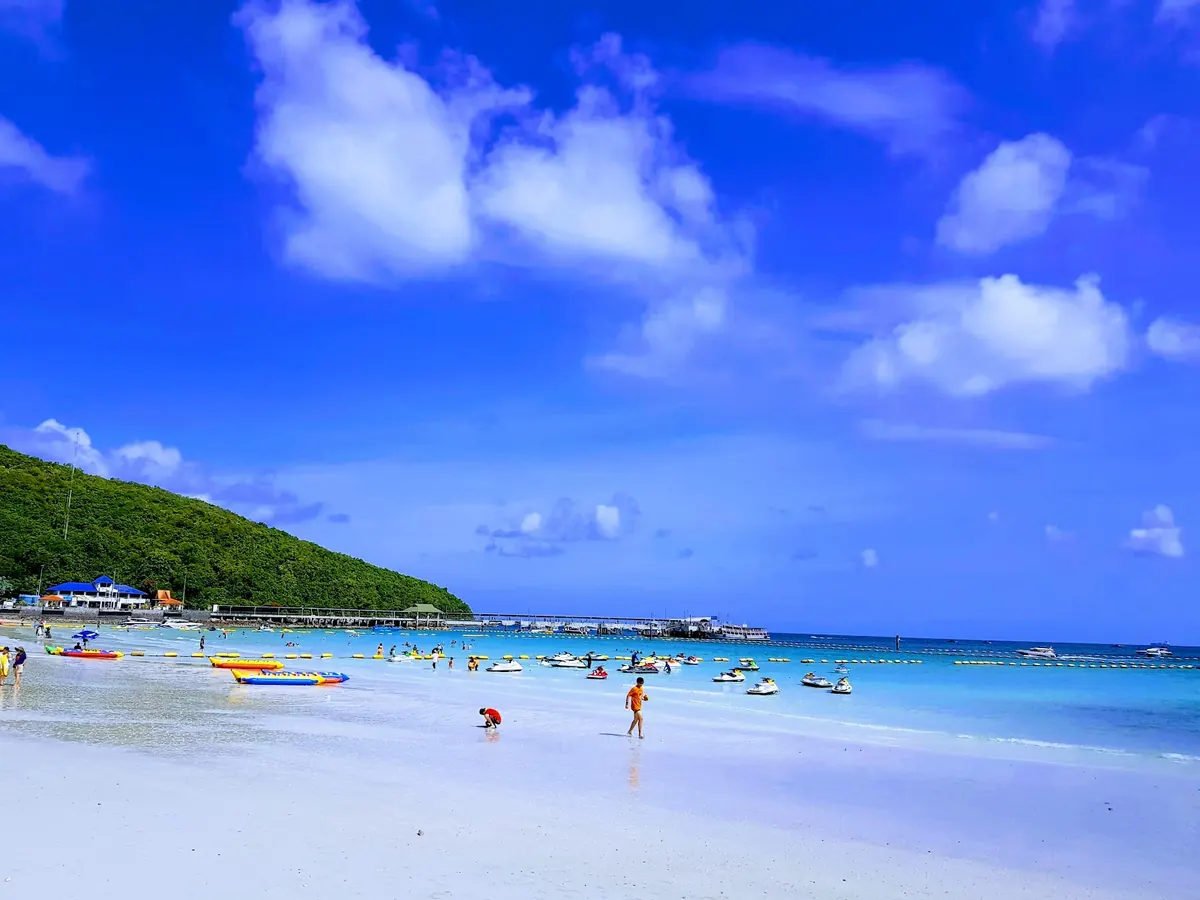
Tawaen Beach, Koh Larn
The turquoise water Pattaya is famous for, 45 minutes offshore.
bars
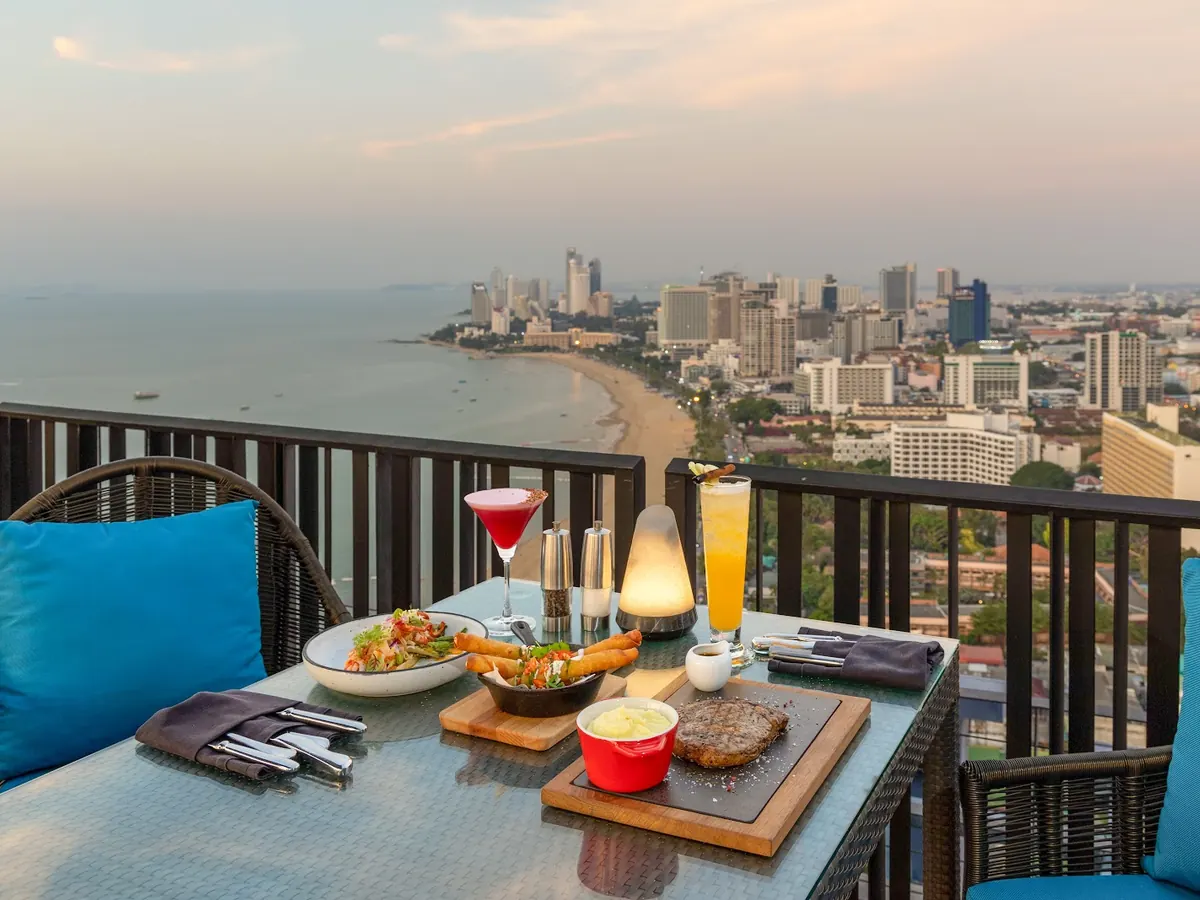
Horizon Rooftop
The view that makes Pattaya make sense.

attractions
Terminal 21 Pattaya
A themed mall that is genuinely worth walking around, and the food court is the point.
attractions
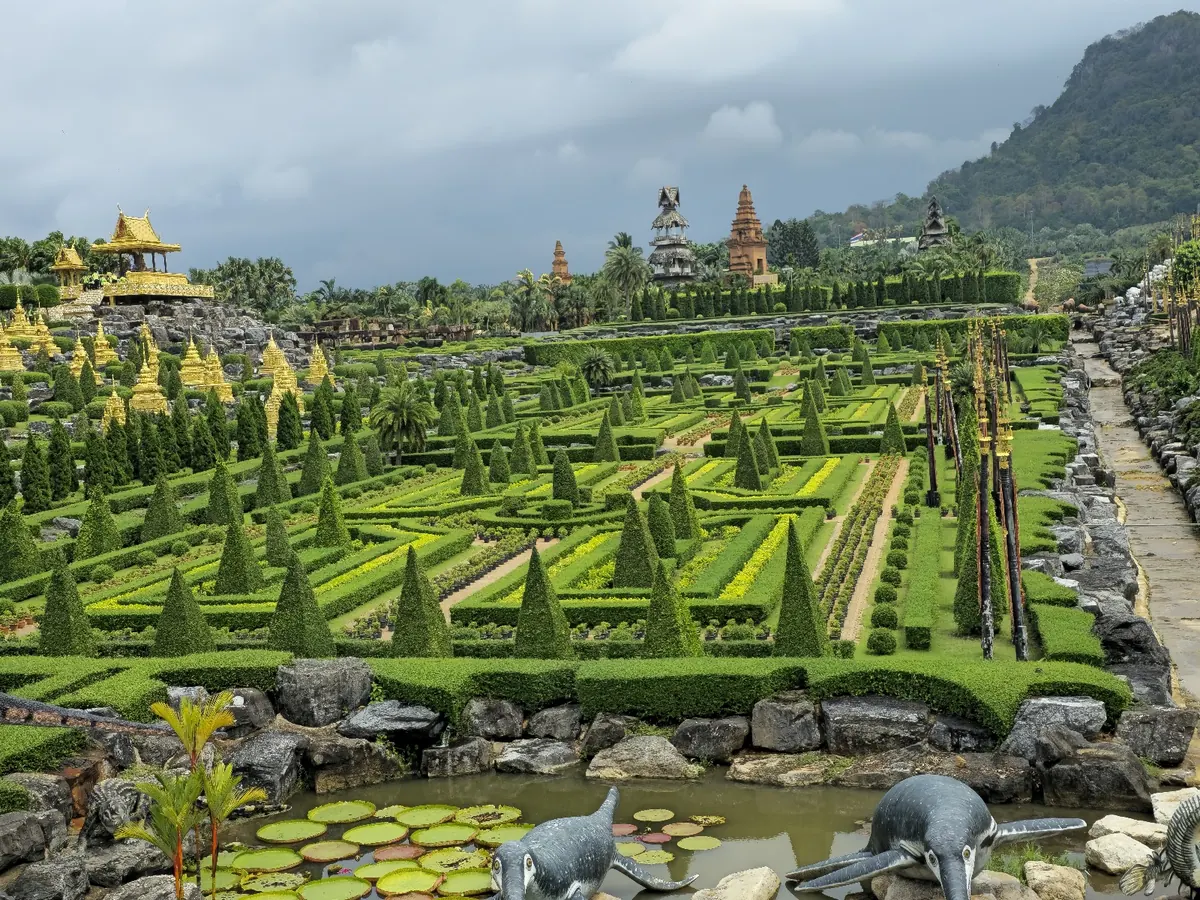
Nong Nooch Tropical Garden
One of the great botanical gardens, plus dinosaurs.
attractions
Phra Tamnak Viewpoint
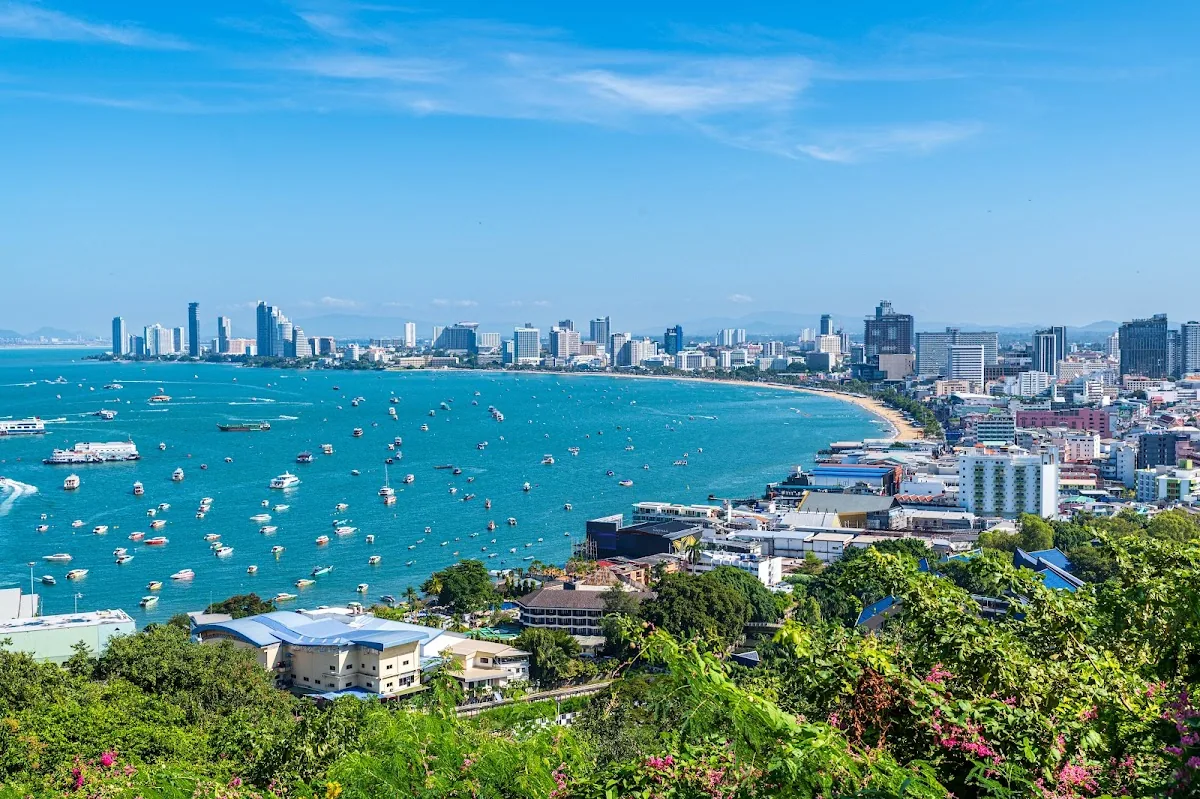
The Pattaya City sign, the whole bay, and no entrance fee.
beaches
Samae Beach, Koh Larn
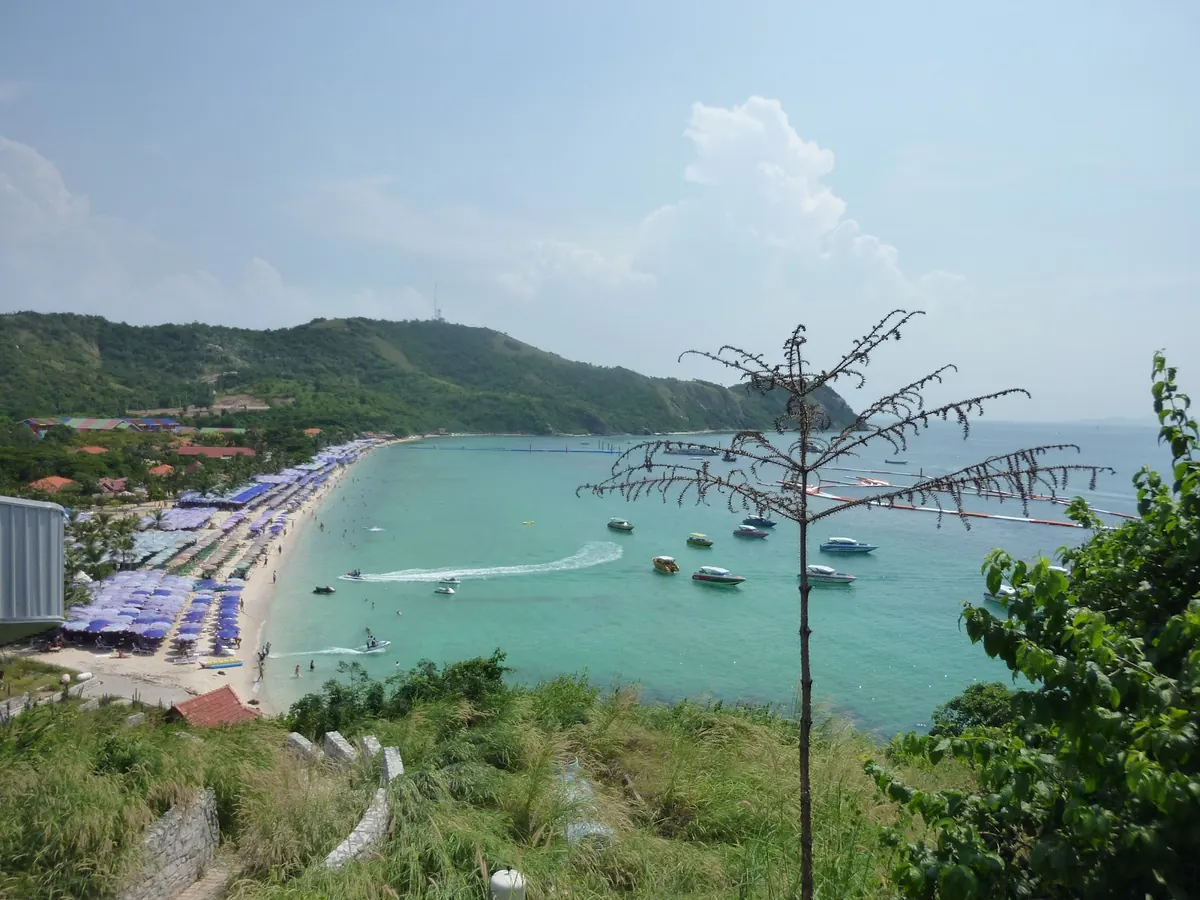
Clearer water, fewer people, ten minutes over the hill.
Related guides
- Trip PlanningPattaya's tourist traps, honestly assessedWhich of the city's famous attractions are worth the money, which are not, and which you should avoid for reasons beyond value.
- ItinerariesPattaya in 48 hoursA first visit, planned around the two things this coast does better than anywhere near it: the water offshore and the light at sunset.
- Day TripsDay trips from PattayaIslands, waterfalls, a vineyard, a floating market and a city two hours away. What is worth the journey and what is not.
Browse every topic in our Pattaya guides, or ask the Pattaya AI Guide about anything in this guide.