

Guide
Thai gold explained: why the baht is a weight, not just money
Thailand runs on 96.5% gold traded by weight at a published daily price, with guaranteed buy-back. It is one of the most interesting things about the country and almost nobody explains it.
7 min readUpdated
Good to know
- Good to know
- Thai gold is 96.5% pure, roughly 23 karat, making it softer and a deeper orange-yellow colour than most Western gold. The 'baht' is both the currency and a unit of weight for gold, approximately 15.244 grams for bars.
- Who it suits
- Gold functions as a savings product for many Thai households and can be a transparent purchase for visitors. It is bought when there is surplus money and sold when there is not.
- What to bring
- When buying gold, ask for the weight in baht, the purity, and the price per baht weight on the day. Always get a proper receipt stating weight, purity, and price, as this is essential for selling it back.
- Typical cost
- The price of gold is fixed by reference to the Gold Traders Association's daily published rates, which update throughout the day. Workmanship charges, called *kah gun*, are not fixed and vary between shops.
Prices are indicative and change with season and fuel costs; treat them as a guide, not a quote.
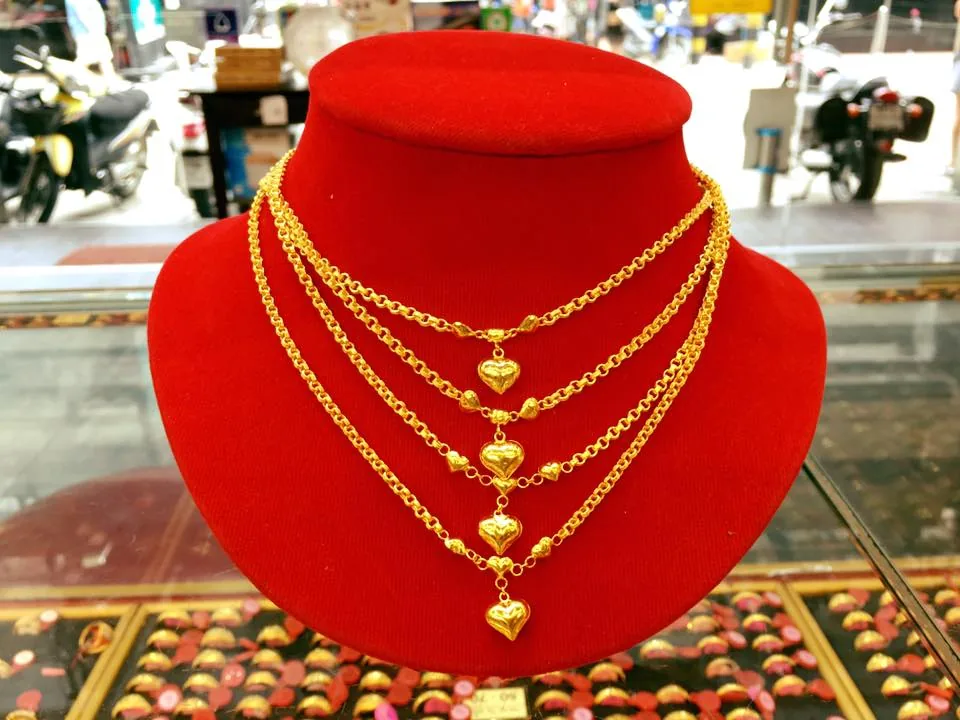
Walk past a row of Thai gold shops and you will notice they look nothing like a Western jeweller. Bright fluorescent light, red or gold walls, chains hung in rows rather than arranged in cases, a security grille, and a digital board on the wall showing numbers that change during the day.
That board is the whole story. Thai gold is not really jewellery. It is a savings product that happens to be wearable, and understanding how it works is one of the more genuinely interesting things a visitor can learn here.
The baht is a weight
This confuses everyone at first. In Thailand, "baht" is both the currency and a unit of weight used for gold.
One baht of gold weight is approximately 15.244 grams for gold bars, and slightly less, around 15.16 grams, for gold ornaments and jewellery. The difference is a long-standing convention rather than a trick.
Gold is bought and sold in fractions and multiples of that unit: half a baht, one baht, two baht, five baht. When a Thai person says they bought a two-baht chain, they are describing weight, not price.
96.5 percent, and why that matters
The Thai domestic standard is 96.5% pure gold, which is roughly 23 karat. That is considerably higher than the 18 karat, and often 14 or 9 karat, common in Europe and North America.
Two consequences follow.
The colour is different. Thai gold is a deeper, more orange-yellow than most Western gold, and visitors sometimes assume it is plated or fake. It is neither. It is simply purer.
It is softer. High-purity gold scratches and bends more easily than lower-karat alloys. Thai gold chains and rings are made thicker to compensate, which is part of why they look the way they do.
Gold shops also sell 99.99% bullion bars, and some sell lower-karat pieces aimed at foreign buyers who want harder metal for daily wear. Ask which you are looking at.
The published price, and the thing that makes it work
Here is the part that has no real equivalent in most Western countries.
The Gold Traders Association publishes buy and sell prices for 96.5% gold daily, and updates them through the day as the international price and the baht exchange rate move. Every gold shop in the country works from that reference. The digital board on the wall is showing you that day's numbers.
This produces something unusual: gold shops buy back. Take a chain into almost any Thai gold shop, and they will weigh it, check it, and pay you the published buy price for the weight, minus a modest deduction. You are not negotiating a second-hand jewellery sale. You are redeeming a commodity at a published rate.
The margin the shop takes is the difference between the buy and sell price, plus a workmanship charge on ornate pieces. That workmanship charge, called kah gun, is the part you do not get back, and it is why heavily worked pieces are a worse store of value than plain chains.
Why Thai households hold gold
Once you know it can be redeemed at a published price on any high street, the behaviour makes sense.
Gold here functions as savings for a large part of the population, particularly those without a strong banking relationship. It is bought when there is surplus money, worn or stored, and sold when there is not. It is given at weddings and at Chinese New Year, and it moves through families as both gift and reserve.
It also functions as collateral. Licensed pawnshops, which are an ordinary and unremarkable part of Thai commercial life rather than a mark of desperation, will lend against gold and hold it until the loan is repaid. Government-run pawnshops exist alongside private ones.
That is why gold shops cluster in market areas rather than luxury districts, and why they are busiest at the start and end of the month.
Buying gold as a visitor
Entirely possible and reasonably straightforward, with a few things worth knowing.
You are buying weight at a published price. Ask for the weight in baht, the purity, and the price per baht weight on the day. Any legitimate shop will give you all three without hesitation.
Workmanship is where the negotiation is. The gold price is fixed by reference. The workmanship charge on a decorative piece is not, and it varies between shops for the same weight.
Get the receipt. A proper receipt states weight, purity and price, and is what you need if you ever sell it back.
Plain is a better store of value than ornate. If the point is the gold rather than the design, a simple chain loses less to workmanship.
Shop around. Prices for the metal are essentially the same everywhere; service, English and workmanship charges are not. Reviewers of Nithiwash Gold Shop on Soi Buakhao repeatedly describe checking three shops and coming back, which is the right approach.
Be clear about what you are buying. Gold shops sell gold. Gem shops sell gems, and gem buying is an entirely different and much riskier proposition for visitors, with a long history of tourist-targeted scams in Thailand. If someone offers to take you to a special gem sale, that is the scam, not a bargain.
Selling it back
If you buy here and want to sell later, you can do so at most Thai gold shops, though a shop is more likely to give you a clean price on a piece with its original receipt.
Selling abroad is different. Outside Thailand, 96.5% gold is usually valued as scrap metal by weight and karat, without the published-price system or the buy-back convention. You will generally get less than the Thai buy price. That is worth knowing before treating a Thai gold purchase as an international investment.
Where the price comes from
The Thai domestic gold price moves on two things at once: the international gold price in dollars, and the dollar-baht exchange rate.
That is why the Thai price sometimes moves when the international price has not, and occasionally moves the opposite way. A weakening baht pushes the local price up even if gold is flat in dollars.
For anyone who wants to watch it properly rather than glancing at a shop window, the daily buy and sell figures are published and tracked online. BahtMarket tracks Thai gold bar prices in real time with alerts and portfolio tracking, which is the easiest way to follow the domestic market rather than the international one.
Where to look in Pattaya
Gold shops cluster where Thai people shop rather than where tourists do.
The Soi Buakhao area has several, including Nithiwash, an owner-run shop where the family speak English and will explain the weight and purity pricing rather than simply quoting a number.
Both large malls, Terminal 21 and Central Pattaya, have jewellery and gold retail, generally aimed at a different customer and priced accordingly.
The Thai markets and the areas around Lan Pho and Naklua have the more traditional shops, which is where you see the system working as it does for residents rather than visitors.
A note on what this is not
This guide explains how the Thai gold market works. It is not investment advice, and nothing here is a recommendation to buy gold as an investment.
Gold prices fall as well as rise, the workmanship charge is a real cost, and anyone thinking about gold as a significant part of their savings should take proper financial advice rather than reading a travel guide.
What is fair to say is that the system itself is interesting, transparent and unusually accessible, and understanding it changes how you read a Thai high street.
Frequently asked questions
What does 96.5% gold mean? It is the Thai domestic purity standard, roughly equivalent to 23 karat, and considerably purer than the 18 or 14 karat common in Western jewellery. It gives Thai gold its deeper colour and makes it softer.
How much is one baht of gold? Baht here is a weight, approximately 15.244 grams for bars and around 15.16 grams for ornaments. The price for that weight changes daily and is published by the Gold Traders Association, so any figure quoted in an article would be out of date immediately.
Can I sell gold back in Thailand? Yes. Most Thai gold shops will buy back 96.5% gold at the published daily buy price, weighed and checked in front of you, minus a modest deduction. Keeping the original receipt makes it simpler.
Is Thai gold real gold? Yes, and purer than most Western jewellery. The deeper orange-yellow colour that makes visitors suspicious is a result of the higher purity, not plating.
Is buying gold in Thailand cheaper than at home? The metal is priced from an international reference, so there is no large arbitrage. What differs is the workmanship charge, which is often lower here, and the buy-back convention, which has no real equivalent in most countries.
Can I take gold out of Thailand? Personal jewellery is generally straightforward. Larger quantities and bullion may be subject to customs declaration requirements both leaving Thailand and entering your own country. Check the rules for both before travelling with anything substantial.
Why do gold shops all look the same? Bright lighting, red and gold interiors, grilles and open displays are a long-standing Thai retail convention, largely Chinese-Thai in origin. The lighting is practical: it shows the metal accurately.
What is the difference between a gold shop and a gem shop? Gold shops trade a commodity at a published price with buy-back. Gem shops sell stones whose value is subjective and hard to verify, and gem sales to tourists have a long history of overcharging in Thailand. Treat them as entirely different propositions.
Common questions
- Is Thai gold real gold?
- Yes, Thai gold is real and purer than most Western jewellery, typically 96.5% pure. Its deeper orange-yellow colour is a result of this higher purity.
- Can I sell gold back in Thailand?
- Yes, most Thai gold shops will buy back 96.5% gold at the published daily buy price, minus a modest deduction. Keeping the original receipt simplifies the process.
- Is buying gold in Thailand cheaper than at home?
- The metal itself is priced from an international reference, so there is no significant arbitrage. However, workmanship charges are often lower in Thailand, and the buy-back convention is unusual compared to most countries.
Places in this guide

attractions
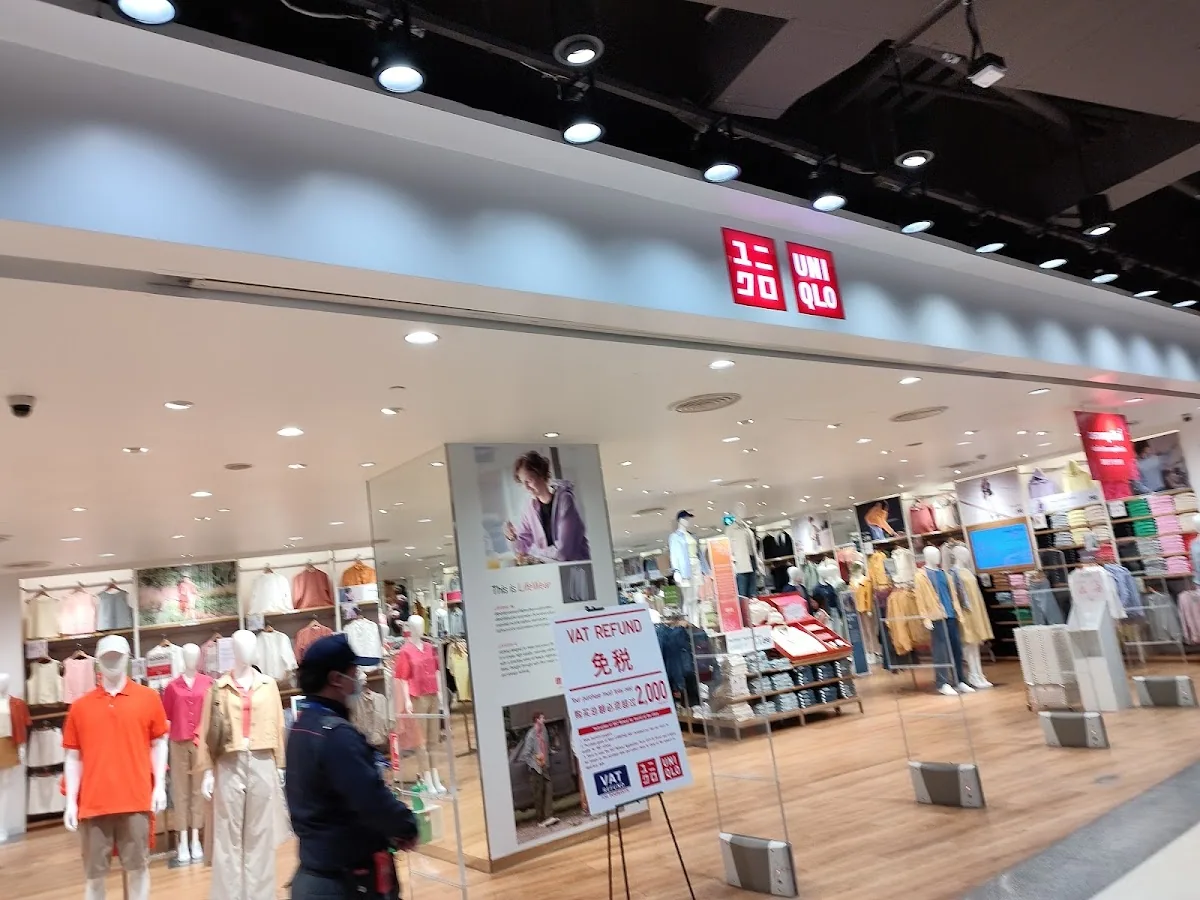
Terminal 21 Pattaya
A themed mall that is genuinely worth walking around, and the food court is the point.
attractions
Central Pattaya
The beachfront mall, with the bay on one side and Beach Road on the other.
hidden-gems
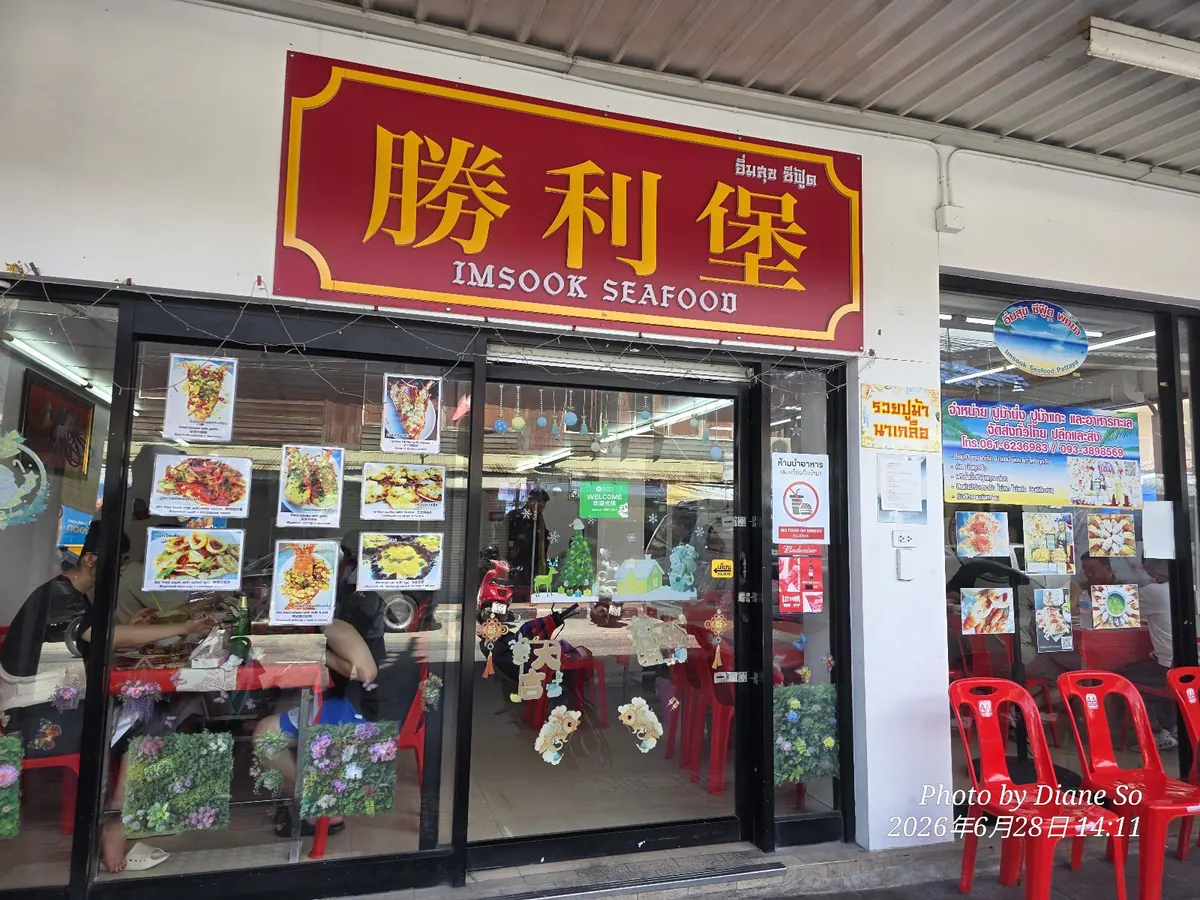
Lan Pho Na Kluea Market
Buy your seafood at the market, then pay someone at the back to cook it.
Related guides
- Things to DoShopping in Pattaya: malls, markets and what is actually worth buyingTwo large malls, several night markets, and a clear-eyed view of what is worth your money and what is a mark-up on something you can buy anywhere.
- ItinerariesWhat to do in Pattaya when it rainsWet season storms are heavy, short and predictable. Here is how to reorder the day instead of losing it.
- Culture & HistorySongkran in Pattaya: the longest water fight in ThailandThai New Year runs longer here than anywhere else in the country, finishing with Wan Lai. What actually happens, how to survive it, and whether to come or avoid it.
Browse every topic in our Pattaya guides, or ask the Pattaya AI Guide about anything in this guide.