

Guide
Muay Thai in Pattaya: watching, training and etiquette
Pattaya offers stadium fight nights for casual visitors and everything from single trial sessions to serious fighter camps for anyone wanting to train, each suiting a different kind of trip.
10 min readPublished
Good to know
- Good to know
- Fight nights and training gyms are separate experiences and can both be booked with little notice
- Getting there
- Stadiums and gyms are spread across Pattaya, check the specific venue location before travelling
- Best time
- Evenings for fight nights, cooler morning sessions for training in hot months
- Who it suits
- Casual visitors should watch a fight night, fit and curious travellers should try one trial session
- What to avoid
- Buying fight night tickets from street touts at inflated prices
Muay Thai in Pattaya can mean watching a fight night at a stadium, taking a single beginner training session at a gym, or committing to weeks of daily training at one of the city's serious camps, and each is a genuinely different experience aimed at a different visitor. Pattaya has one of the densest concentrations of Muay Thai gyms in Thailand, ranging from tourist-friendly drop-in classes to fighter camps producing competitors for major stadiums, alongside regular fight cards at venues around the city.
This guide covers the realistic difference between watching and training, what a beginner session actually involves, how to choose a gym, what to expect at a stadium, ringside etiquette and the honest physical toll of training, so expectations match reality before you commit either your evening or your holiday to it.
Watching a fight night
Pattaya hosts regular Muay Thai fight cards at stadium venues around the city, often promoted heavily along Beach Road and Walkway areas with flyers and touts selling tickets at inflated prices to passing tourists. A fight night typically runs through an evening with a card of several bouts, ranging from young or lower-level fighters in the earlier bouts to more experienced fighters in the main events later in the card. Crowds are a mix of tourists, expats and Thai regulars, and the atmosphere, particularly around the ringside betting that Thai spectators take seriously, is a genuine part of the experience rather than a staged tourist show.
Tickets are sold in tiers, with ringside seats costing considerably more than seats further back, and prices vary by venue and by how the card is being promoted that week, so it is worth checking current prices directly with the venue rather than relying on a tout's opening offer. Buying tickets in advance from the stadium itself, from a reputable agent, or through a hotel generally avoids the more aggressive markups sold on the street. This pattern of inflated street pricing is covered in more general terms in the guide to costs and scams, and the same caution applies here.
Watching a fight night suits almost any visitor with an evening free and some tolerance for a loud, smoky, occasionally rough atmosphere. It is not a polished spectator sport experience in the way a Western arena event is; expect basic seating, a lively crowd, and fights that can be genuinely brutal to watch for anyone unprepared for the sport's realities, including knockouts and visible injuries. Anyone squeamish about that should know what they are booking before they buy a ticket.
Training: what a beginner session involves
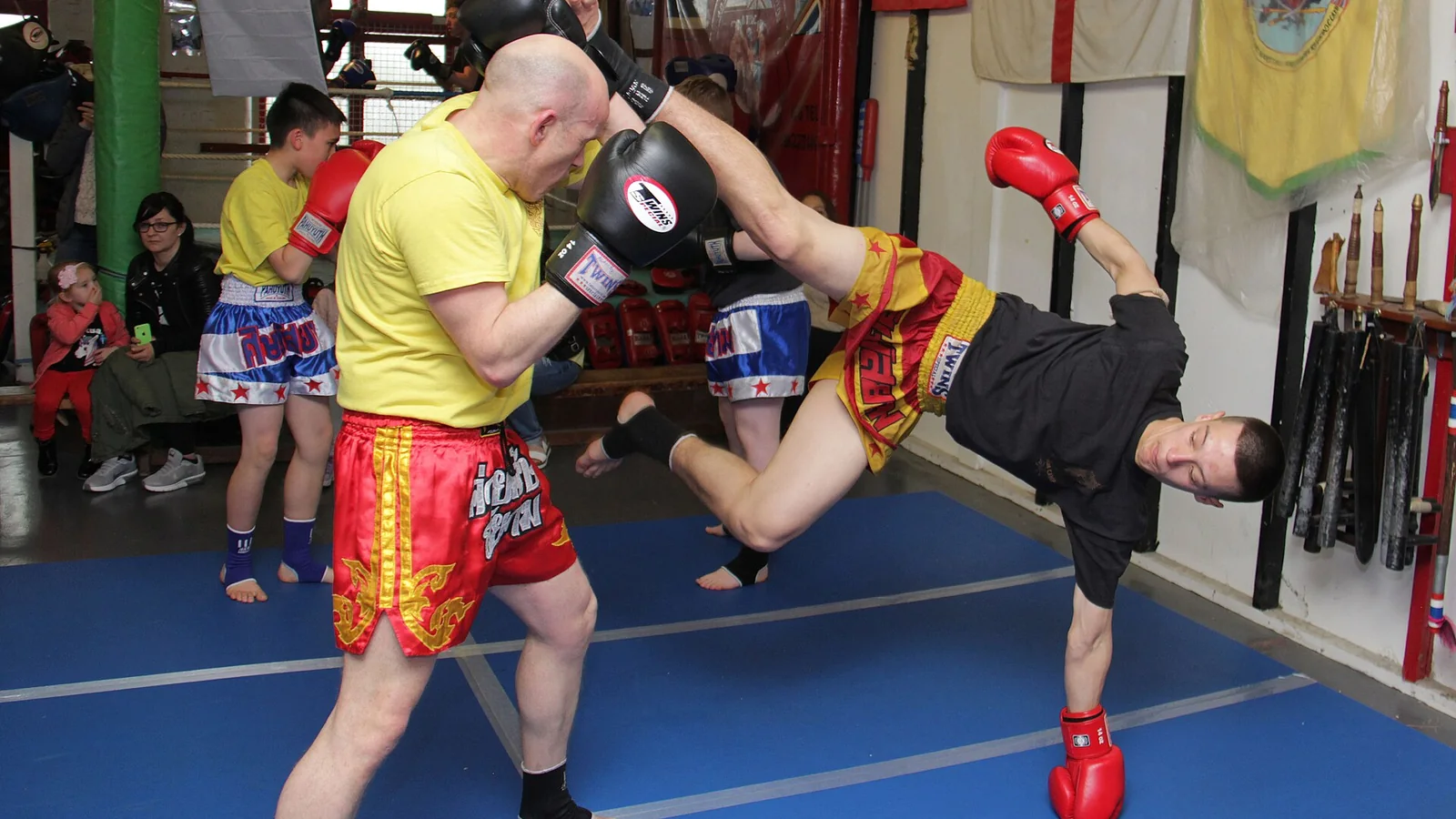
A first Muay Thai session for a complete beginner at a tourist-friendly gym typically runs for an hour to ninety minutes and follows a fairly standard structure: a warm-up, shadow boxing to learn the basic stance and strikes, pad work with a trainer holding focus mitts or Thai pads to practise punches, kicks, knees and elbows, and often some basic clinch work. Trainers at beginner-focused gyms are used to complete novices and will adjust pace and intensity accordingly, so no prior fitness or experience is expected or required.
The heat is the first thing most beginners underestimate. Training sessions run hot even with fans and open-sided gyms, and a single session can be a serious workout for someone unused to Thailand's climate. Drinking water before, during and after a session matters more than it would for the same class at home, and it is worth eating a light meal beforehand rather than training on a completely empty or completely full stomach.
A single trial session is a reasonable way to find out whether training appeals before committing to a longer package, and most gyms that cater to tourists offer exactly this option. It is also worth noting that a single session will not produce visible fitness results; anyone hoping to genuinely improve conditioning or technique needs to think in terms of at least a week of consistent sessions, and serious improvement takes considerably longer than a typical holiday allows.
Choosing a gym
Pattaya's Muay Thai gyms range widely in character, and the right one depends heavily on what a visitor wants out of training. Some gyms are set up specifically for holidaymakers, with English-speaking staff, flexible drop-in pricing, and a welcoming approach to complete beginners who may only train once or twice during a trip. Others are serious fighter camps, training active competitors alongside a smaller number of longer-term foreign trainees, with a harder, faster-paced atmosphere that assumes some existing fitness and is less suited to a single tourist session.
A few practical things are worth checking before committing to a gym, whether for one session or several weeks. Ask whether sessions are run in English or whether a translator or English-speaking trainer is available, since instruction quality drops sharply if nobody can explain what is being asked. Ask about class sizes and whether beginners get individual pad time with a trainer or are largely left to follow along in a group, since one-to-one pad work matters far more for learning technique safely than group drills. Visit or watch a session before signing up for a longer package if possible, since gyms vary enormously in atmosphere even within Pattaya, and what suits one visitor will not suit another.
Longer stays are common among visitors who come specifically for Muay Thai, sometimes for weeks or months at a time, often combined with a nearby stay in East Pattaya or elsewhere depending on the gym's location. Visitors mixing training with a broader stay in the city should also look at the general picture in fitness in Pattaya, since several gyms operate alongside general fitness facilities rather than purely as Muay Thai camps.
What to expect at a stadium
A stadium in Pattaya is a functional, sometimes basic venue rather than a modern arena, and the experience trades polish for authenticity. Expect plastic or bench seating, the sound and smell of a genuinely working boxing venue, and a card that runs later into the evening than advertised as bouts are added or adjusted. Ringside seats put spectators close enough to see and hear everything clearly, including the referee's calls and the fighters' corners between rounds, and are worth the extra cost for anyone genuinely interested in the sport rather than treating it as background entertainment.
The traditional pre-fight ritual, the wai khru ram muay, in which each fighter performs a slow, ceremonial dance around the ring before the bout begins, is a genuine part of Muay Thai culture rather than a show staged for tourists, and is worth watching closely rather than treating as a delay before the real action starts. The accompanying live music, played by a small band beside the ring throughout each bout, is also traditional and shapes the pace and rhythm of the fight itself.
Etiquette, for spectators and trainees
Muay Thai carries genuine cultural and spiritual weight in Thailand, and a few points of etiquette matter to observe, whether watching or training. The ring itself is treated with respect: spectators should not step into or over the ropes uninvited, and at some venues walking around the ring rather than climbing through it is expected. Fighters wear a mongkol, a sacred headband, during the pre-fight ritual, and it is removed before the fight itself; touching a fighter's mongkol or gloves without invitation is best avoided.
In a training gym, basic respect towards trainers matters more than technical polish for a beginner. Bowing slightly or offering a wai to a trainer at the start and end of a session is appreciated though not always strictly required at tourist-focused gyms, and following instructions promptly rather than freelancing technique is expected, particularly during pad work where a trainer's timing and positioning is part of keeping the session safe. Feet are considered the least respectful part of the body in Thai culture generally, and this extends to training: deliberately pointing feet at a trainer, a training partner or any image of the King or Buddha in a gym is worth avoiding, in line with the broader guidance in Thai etiquette for visitors.
Fitness level and injury realities
Muay Thai training is a genuinely demanding form of exercise, and it is worth being honest about the physical toll before booking multiple sessions. A single beginner class is manageable for almost anyone with reasonable general health, but the sport uses shins, knees and elbows as striking surfaces, which means bruising, particularly on the shins during early pad and bag work, is close to universal for beginners rather than a sign of doing something wrong. Trainers at reputable gyms adjust intensity for beginners and will not push a first-timer into contact sparring, but anyone with existing joint problems, a heart condition or other significant health concerns should mention this before the session starts rather than after.
Longer-term training at a serious camp is a different proposition altogether, involving daily sessions, genuine sparring, and a level of physical demand closer to that of an amateur or professional fighter's schedule. Visitors coming specifically to train intensively for weeks should arrive with realistic fitness expectations and should not assume a single trial session at a tourist gym accurately represents what a serious camp's daily schedule feels like.
Comparing watching and training
- Watching a fight night: low commitment, one evening, best for anyone curious about the sport or wanting an authentic local night out.
- A single trial training session: moderate commitment, an hour or two, best for fit and curious visitors wanting a taste of training without ongoing commitment.
- A short training package over several days: higher commitment, noticeable soreness and bruising expected, best for visitors staying a week or more who want real progress.
- Long-term camp training: highest commitment, weeks or months, best for visitors specifically travelling to Thailand to train seriously.
Who each option suits
Casual visitors with one evening to spare and an interest in local culture are well served simply watching a fight night, ideally with a ringside seat bought through a reliable source rather than a street tout. Fit, curious travellers who want a genuine taste of the sport without committing their whole trip to it should book a single trial session at a beginner-friendly gym. Visitors who already box, kickbox or do a related combat sport and want to train seriously during a longer stay should look specifically at fighter-focused camps rather than tourist gyms, since the intensity and quality of coaching differ meaningfully. Families travelling with children can generally watch a fight night together, though the more graphic moments of some bouts are worth considering in advance for younger children, and some gyms also offer lighter, non-contact sessions suited to kids as part of broader activities covered in Pattaya with kids.
What to avoid
Avoid buying fight night tickets from street touts at inflated prices when the same seats can usually be booked more cheaply through the venue directly or a hotel. Avoid booking multiple weeks of intensive training on the assumption that a single beginner class fully prepares you for it; the jump in intensity between a tourist session and serious camp training is considerable. Avoid training on an empty stomach or without adequate water given how hot even a short session becomes. Avoid disrespecting the ring, a fighter's mongkol, or a trainer's instructions out of ignorance rather than intent; a little awareness of etiquette goes a long way in a sport that Thailand takes seriously as both sport and tradition.
The Pattaya.Guide verdict
Muay Thai in Pattaya rewards visitors who pick the version that actually matches their appetite. Watching a fight night is close to a mandatory recommendation for anyone spending more than a couple of days in the city and open to a loud, authentic evening out. Training is a different commitment entirely, and a single trial session is worth trying for almost anyone reasonably fit, but genuine progress needs more than a holiday's worth of sessions. Do either with a little respect for what the sport means here and it repays the effort.
Common questions
- Is it worth watching a Muay Thai fight in Pattaya?
- Yes, a Muay Thai fight night is a genuinely authentic local event rather than a staged tourist show, with real crowd energy and traditional pre-fight rituals. It is best enjoyed with some awareness that fights can be intense to watch, including visible impact and occasional knockouts. Buying tickets through a venue or hotel rather than a street tout usually avoids inflated pricing.
- Can complete beginners try Muay Thai training in Pattaya?
- Yes, many gyms in Pattaya cater specifically to complete beginners with single trial sessions that need no prior experience or fitness. Trainers at these gyms adjust pace and intensity for newcomers and focus on basic stance, strikes and pad work rather than sparring. Expect a genuinely hot, demanding session even at beginner level.
- How many training sessions do I need to see any improvement?
- A single session gives a taste of the sport but produces no meaningful fitness or technique improvement on its own. Visitors wanting to notice real progress should plan for at least a week of consistent daily or near-daily sessions, and serious improvement takes considerably longer than most holidays allow.
- What should I wear to watch a Muay Thai fight in Pattaya?
- Casual, comfortable clothing is fine for watching a fight night, since stadium venues in Pattaya are functional rather than formal. Light clothing is sensible given the heat and crowded seating, and closed shoes are worth considering given basic stadium conditions.
- Is Muay Thai training safe for someone with no combat sports experience?
- A single beginner session at a reputable, tourist-friendly gym is safe for most people in reasonable general health, since trainers avoid pushing newcomers into contact sparring. Bruising, particularly on the shins, is common even at beginner level and is a normal part of the sport rather than a sign of poor technique. Anyone with existing joint problems or significant health concerns should mention this to the trainer before the session begins.
Related guides
- Things to DoCinemas in Pattaya: all four screens, and which to chooseFour cinemas, cheap tickets and serious air conditioning. Where each one is, how to avoid booking a dubbed film by mistake, and the one moment everybody stands up.
- Things to DoDiving and water sports in PattayaPattaya is one of the cheapest places in the world to learn to dive, with wrecks, year-round conditions and a genuine caveat about visibility.
- Things to DoFishing in Pattaya: lakes, sea charters and what to expectPattaya offers stocked freshwater lake fishing in East Pattaya for near-guaranteed catches, and wild sea fishing charters from Bali Hai Pier or Bang Saray for a more variable, genuine day at sea.
Browse every topic in our Pattaya guides, or ask the Pattaya AI Guide about anything in this guide.