

Guide
Sriracha: the Japanese town 40 minutes north of Pattaya
One of the largest Japanese communities in Asia outside Japan, built around the industrial corridor, with the restaurants and shops to match. Almost no visitors go.
7 min readUpdated
Good to know
- Getting there
- Sriracha is around 40 minutes north of Pattaya by road, via Sukhumvit or the motorway. Ride-hailing works, and a car with a driver for the day is an easier option.
- Who it suits
- This trip suits anyone who has explored Pattaya's main attractions, is interested in high-quality Japanese food, or is a long-term resident seeking Japanese groceries. It is also suitable for families.
- Good to know
- English is less widely spoken in Sriracha than in Pattaya, with Japanese being more common, especially around J-Park. Translation apps are recommended.
- What to bring
- If you plan to buy perishable items from Don Don Donki, bring a cool bag to keep them fresh for the drive back.
Forty minutes north of Pattaya there is a town where the supermarket signage is in Japanese, the bookshop sells manga, and a shopping complex has been built to look like a Japanese village. Almost no tourists go there, and that is precisely the reason to.
Sriracha exists in the same region as Pattaya and has almost nothing in common with it.
Why there is a Japanese town in Chonburi
The short answer is manufacturing.
Thailand's eastern seaboard is the country's industrial heartland, and Japanese companies have been central to it for decades. The automotive sector in particular is heavily Japanese-invested, with assembly plants, parts suppliers and engineering firms spread across the industrial estates of Chonburi and Rayong.
Those companies need managers, engineers and technical staff, many of them posted from Japan on multi-year assignments, often with families. Sriracha sits conveniently between the estates and Laem Chabang port, and over time it became where they settled.
Once a community reaches a certain size it starts to supply itself. Japanese schools, clinics with Japanese-speaking staff, supermarkets stocking Japanese groceries, restaurants run by Japanese chefs for Japanese customers, hairdressers, bookshops and bars. That is what Sriracha now has, and it is why the food is good: the customers know the difference.
J-Park Sri Racha Nihon Mura
The most visible expression of it, and the easiest place to start.
J-Park is a Japanese-themed complex built around courtyards, koi ponds and cherry blossom, with a replica pavilion and architecture thorough enough that people photograph it for its own sake. It could easily have been a gimmick and it is not, largely because it was built to serve the local Japanese community rather than tourists.
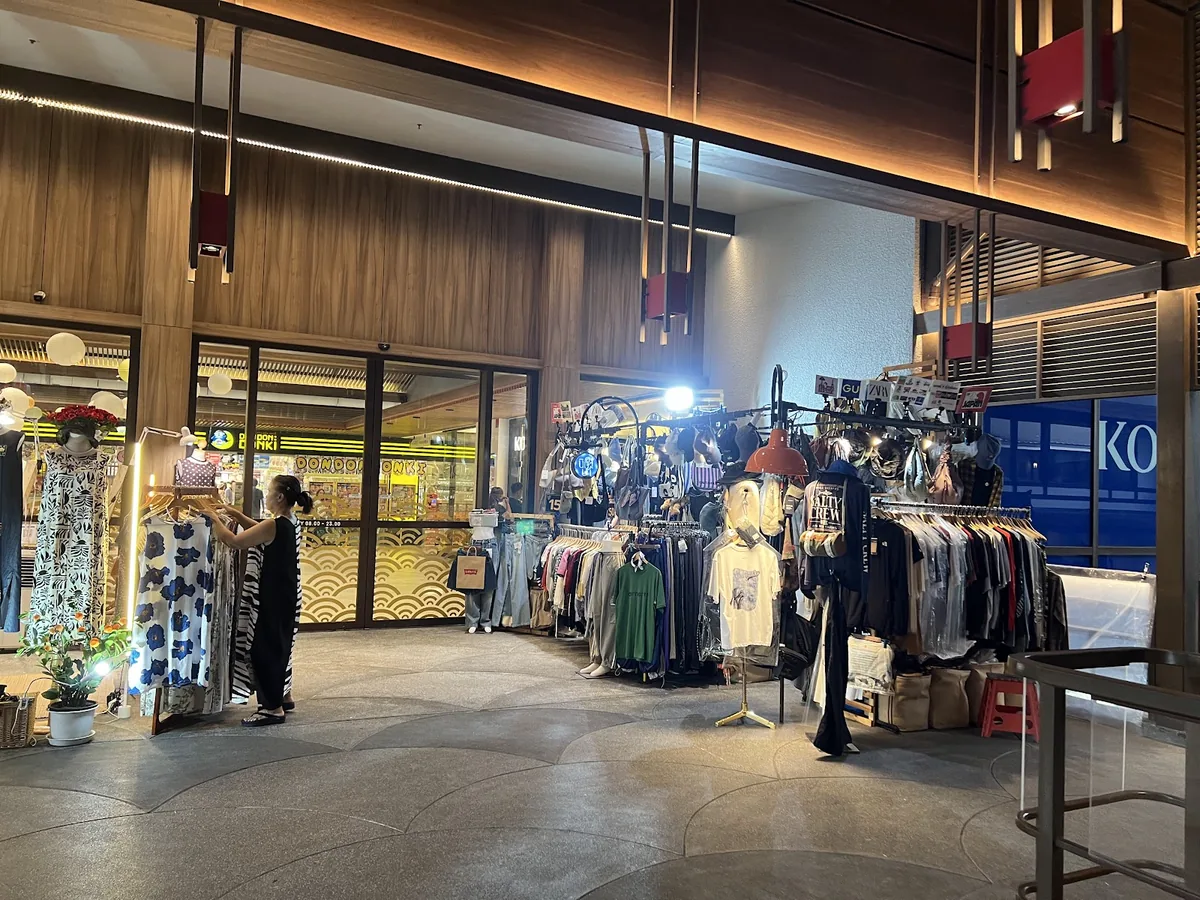
The anchor is a Don Don Donki, the Japanese discount chain, which carries groceries, snacks, skincare and household goods. Around it are restaurants covering ramen, sushi, shabu, curry and Japanese fast food, plus grocery stores, a pre-owned luxury goods shop and various services.
It takes a couple of hours to wander, and lunch there is the point.
The rest of the town
Sriracha itself is a working Thai coastal town rather than a resort, and it repays a wander.
The waterfront has a promenade, seafood restaurants and a view across to the islands and the shipping anchorage. It is unpretentious and mostly Thai.
Ko Loi is a small island connected by a causeway, with a temple and views back across the water, and it is the town's main landmark.
The seafood is the other reason to come. Sriracha sits on a working coast and the restaurants along the front reflect that, at local prices.
And, yes, the sauce. Sriracha chilli sauce takes its name from the town, though the version most Westerners know is an American product with a different recipe. The Thai original, Sriraja Panich, is thinner, sweeter and milder, and is worth buying to compare.
What it tells you about the region
Sriracha is the clearest illustration of something visitors to Pattaya rarely register: this coast has two economies.
One is tourism, concentrated in Pattaya and along the beaches. The other is heavy industry, ports and manufacturing, spread across Chonburi and Rayong, and considerably larger in economic terms. Sriracha belongs to the second.
That produces a very different kind of town: prosperous, functional, oriented toward long-term residents rather than visitors, and largely indifferent to whether anyone comes to look at it.
Making a day of it
Getting there. Around forty minutes by road north of Pattaya on Sukhumvit, or via the motorway. Ride-hailing works, and a car with a driver for the day is the easier option if you want to combine stops.
A workable plan. Morning at J-Park, wandering the complex and browsing Don Don Donki. Japanese lunch there. Afternoon on the Sriracha waterfront and Ko Loi. Seafood or a coffee before heading back.
Combining it. Sriracha sits on the way north toward Bangkok, so it works as a stop on a longer journey. It also pairs with the Laem Chabang area if you have any interest in the port, which is visible from several points along the coast road.
Timing. Weekdays are quieter. Weekends bring Thai and Japanese families from across the area, which is livelier and busier.
Who this trip suits
Anyone who has done Pattaya's obvious attractions and wants to see a different version of the region.
Anyone interested in Japanese food, because the standard here is genuinely high and priced for residents rather than tourists.
Longer-stay residents, for whom Don Don Donki and the Japanese supermarkets are a practical resource rather than a curiosity.
Families, because J-Park is easy, open and interesting to children without being an attraction with a ticket price.
Who it does not suit
Anyone looking for a beach, nightlife or a conventional tourist day. Sriracha has none of those and does not pretend to.
Practical notes
Cash and cards are both widely accepted at J-Park; the town is more cash-oriented.
Language. English is less widely spoken here than in Pattaya, and Japanese is more so. Translation apps earn their keep.
Parking at J-Park is straightforward. Parking in the town centre is less so.
Healthcare. If anything goes wrong, Pattaya's international-standard hospitals are forty minutes back down the road, and there are private hospitals in Sriracha itself.
Frequently asked questions
How far is Sriracha from Pattaya? Around forty minutes by road to the north, depending on traffic and route. There is no useful public transport connection for visitors, so a car, a driver or ride-hailing is the practical option.
Why are there so many Japanese people in Sriracha? The eastern seaboard is Thailand's industrial centre and Japanese companies, particularly in automotive manufacturing, have a very large presence in the surrounding industrial estates. Sriracha became the residential base for Japanese staff and their families, and the town developed services to match.
Is J-Park worth visiting? Yes, if you enjoy Japanese food and shopping or want a change from Pattaya. It is well built, genuinely used by the local Japanese community, and free to enter. It is not a theme park and there is no ride or attraction beyond wandering and eating.
Is Sriracha sauce from Sriracha? The name comes from the town, but the sauce most Westerners know is an American product with a different recipe. The Thai original is thinner, sweeter and milder, and is easy to buy locally.
Can I do Sriracha as a half day? Yes. J-Park alone is a comfortable half day with lunch. Adding the waterfront and Ko Loi makes it a full one.
Is there anything for children? J-Park is easy with children, with open space, koi ponds and plenty to look at, and the food options suit most tastes. There is no dedicated children's attraction.
Do people speak English? Less than in Pattaya. Japanese is more widely spoken in the J-Park area than English. A translation app is useful.
Is it worth staying overnight? Generally no, for a visitor. Sriracha works better as a day trip from Pattaya, which has far more accommodation choice.
The wider industrial coast
Sriracha sits in the middle of something much larger, and understanding it changes how you read the whole region.
Laem Chabang, just south of Sriracha, is Thailand's main deep-sea port and one of the busiest container ports in the world, currently undergoing a major capacity expansion. You can see the cranes from the coast road.
The industrial estates spread inland and south from there, covering automotive assembly, parts manufacturing, electronics and machinery, with the petrochemical complex at Map Ta Phut further down in Rayong.
The Eastern Economic Corridor is the government development programme covering Chonburi, Rayong and Chachoengsao, driving port expansion, airport development at U-Tapao and a planned high-speed rail link.
None of this is a tourist attraction. But it explains why a Japanese village exists in Chonburi, why Pattaya has an international hospital of the standard it does, and why the region has a business services sector far larger than a beach town would generate.
Practical tips for the drive
Go on a weekday if you want J-Park quiet, and a weekend if you want it lively.
Take the motorway rather than Sukhumvit if traffic is heavy; it is faster and considerably less stressful.
Combine it with the coast road south of Sriracha, which gives you views over the port and the anchorage.
Bring a cool bag if you plan to buy anything from Don Don Donki that needs to survive the drive back.
Japanese food, specifically
The reason most visitors make the trip, and it is worth being specific about why the standard is high.
Restaurants serving a resident Japanese community are judged by customers who know what the dish is supposed to taste like and who have alternatives. That produces a different kind of kitchen from a Japanese restaurant in a tourist area.
You will find ramen, sushi, shabu shabu, tonkatsu, curry rice, izakaya food and Japanese fast-food chains, alongside grocery stores selling ingredients that are difficult to buy elsewhere in the region.
Prices are ordinary rather than premium, because these are everyday restaurants rather than special-occasion ones.
If you are staying in Pattaya long term and miss Japanese ingredients, this is where to stock up.
What else is in the area
Khao Khiao Open Zoo, inland from Sriracha, is one of the better zoos in Thailand and a full day in itself.
The hills and reservoirs inland give a completely different landscape within half an hour, and the drive is pleasant.
Bang Saen, further north, is the Thai seaside town for Bangkok and Chonburi families, with a long beach, deckchairs and almost no foreign visitors.
Any of these pairs with a Sriracha morning into a full day out.
Common questions
- Why is Sriracha known as a Japanese town?
- Sriracha became a residential hub for Japanese managers, engineers, and technical staff working in the surrounding industrial estates, leading to the development of Japanese schools, supermarkets, restaurants, and other services.
- Is J-Park Sri Racha Nihon Mura worth visiting?
- Yes, J-Park is worth visiting if you enjoy Japanese food and shopping or want a change from Pattaya. It is well-built, free to enter, and genuinely used by the local Japanese community.
- Is the Sriracha chilli sauce from this town?
- The name of Sriracha chilli sauce does come from the town, but the version most Westerners know is an American product with a different recipe. The Thai original, Sriraja Panich, is thinner, sweeter, and milder.
Places in this guide
Related guides
- Things to DoCinemas in Pattaya: all four screens, and which to chooseFour cinemas, cheap tickets and serious air conditioning. Where each one is, how to avoid booking a dubbed film by mistake, and the one moment everybody stands up.
- Getting AroundGetting to Pattaya from Bangkok and the airportsTwo airports, four realistic routes, and the one that is right depends entirely on your luggage, your budget and what time you land.
- Things to DoMassage and spas in Pattaya: how to find the good onesTraditional Thai massage is a serious therapeutic tradition. Here is how to tell a proper shop from the rest, and what the treatments actually involve.
Browse every topic in our Pattaya guides, or ask the Pattaya AI Guide about anything in this guide.