

Guide
The Pattaya coffee guide
Pattaya has hundreds of cafés and a much smaller number roasting properly. Where to find real specialty coffee, and how to order it.
6 min readUpdated
Good to know
- Opening hours
- For an early start, Sunset Coffee Roasters opens at seven; SQUID COFFEE is daytime only and closed on Sundays.
- Good to know
- Coffee is served iced and sweet by default, so ask for it hot if you prefer, and say 'mai sai nam tan' for no sugar.
- Best time
- Albatross Coffee Roasters is best visited first thing in the morning, as the compact room heats up by midday.
- Who it suits
- Remote workers will find BRU the quietest option, while Albatross and Sunset are good for an early start before the heat.
Thailand grows excellent coffee. Most of it is in the north, around Chiang Rai and Chiang Mai, where arabica has been cultivated on hillsides since the royal projects replaced opium poppies in the 1970s. The best of it now competes internationally.
Almost none of that reaches the average Pattaya café, which is why a city with hundreds of coffee shops has perhaps a dozen worth a detour.
This is where to find the ones that are.
What separates the good ones
Three signals, and they are reliable.
Roasted on site, or by someone named. A café that roasts its own beans, or buys from a roaster it will tell you about, has made a decision about coffee. One that will not answer the question has not.
A light roast on the filter menu that is actually light. "Light roast" has become a marketing term here. A genuinely light-roasted single origin tastes of fruit and acidity rather than caramel and chocolate. If everything on the menu tastes the same, the roasting is doing the work rather than the bean.
Someone who wants to talk about it. The best rooms in this city are owner-operated and the owner is usually behind the machine. That is not a coincidence.
The roasteries
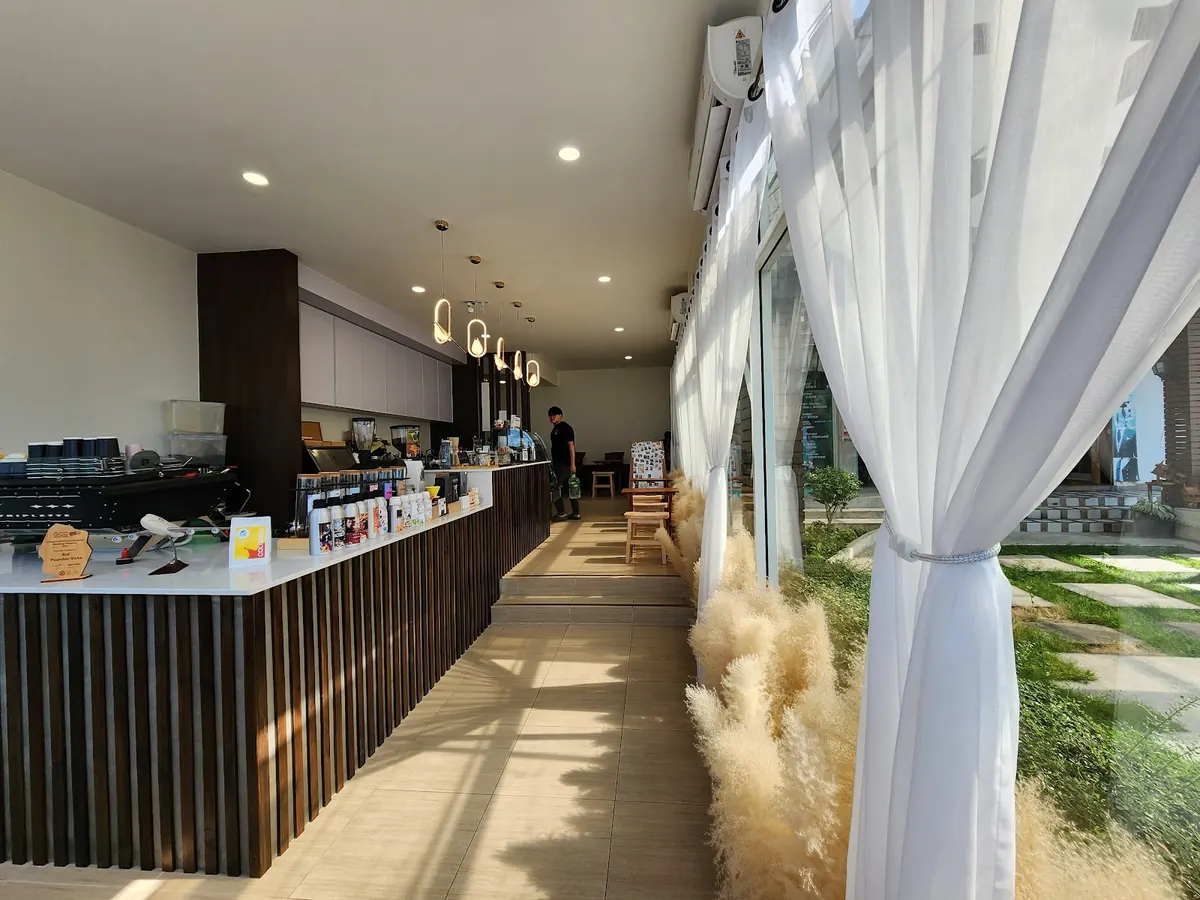
Albatross Coffee Roasters is the most flexible good coffee in the city, largely because of its hours: it opens well before most cafés here and runs into the evening. It roasts on site, keeps several single origins on at once, and the staff will walk you through them without being asked twice. The room is compact and the air conditioning fights a losing battle by midday, so take the front seats, which look across at the sea. Best used first thing.
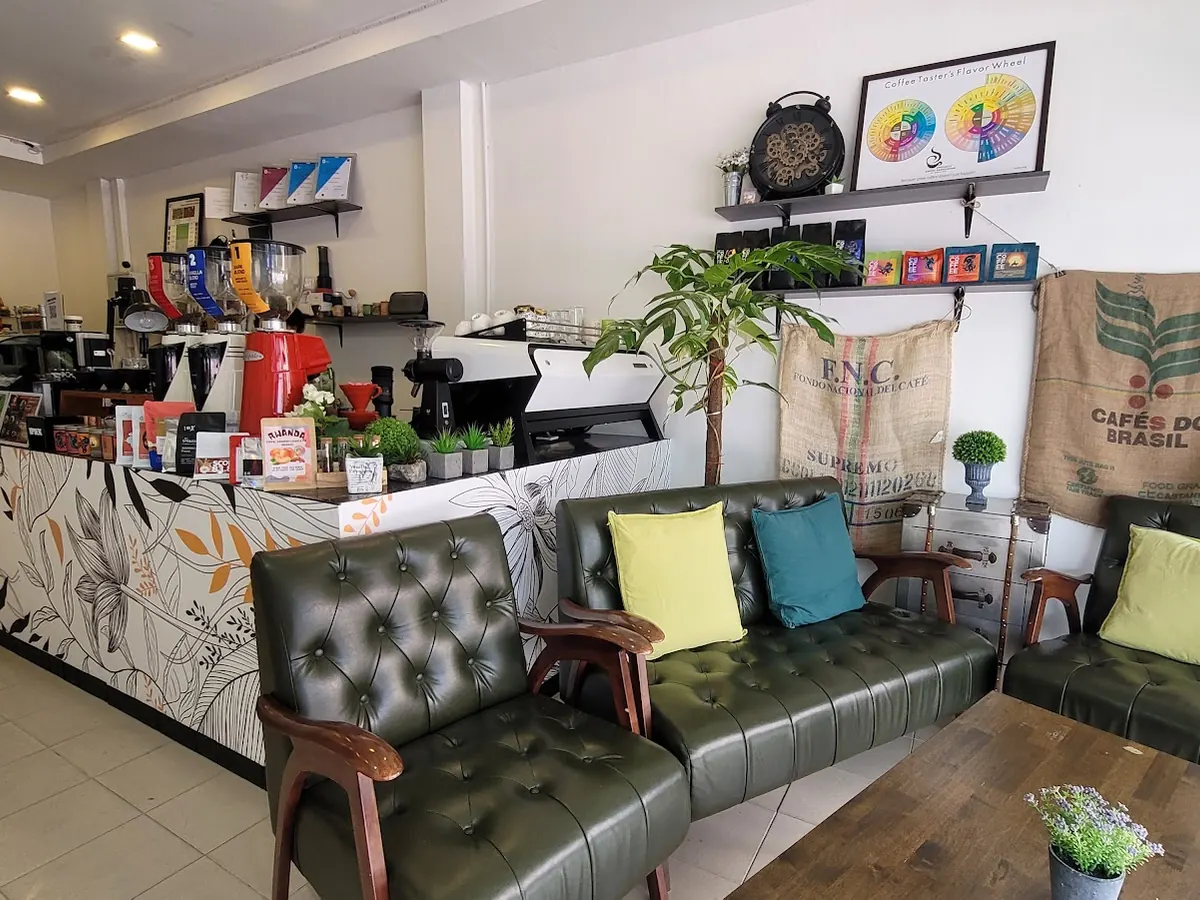
SQUID COFFEE over toward Nong Prue is the most technically serious bar in Pattaya. The espresso machine is set up differently across each group head to bring out different finishing notes, which is a level of fiddling you normally only find in Bangkok. Espresso and V60 both done properly, house blends roasted in-house, beans to take away. Small, quiet, daytime only, and closed Sundays.
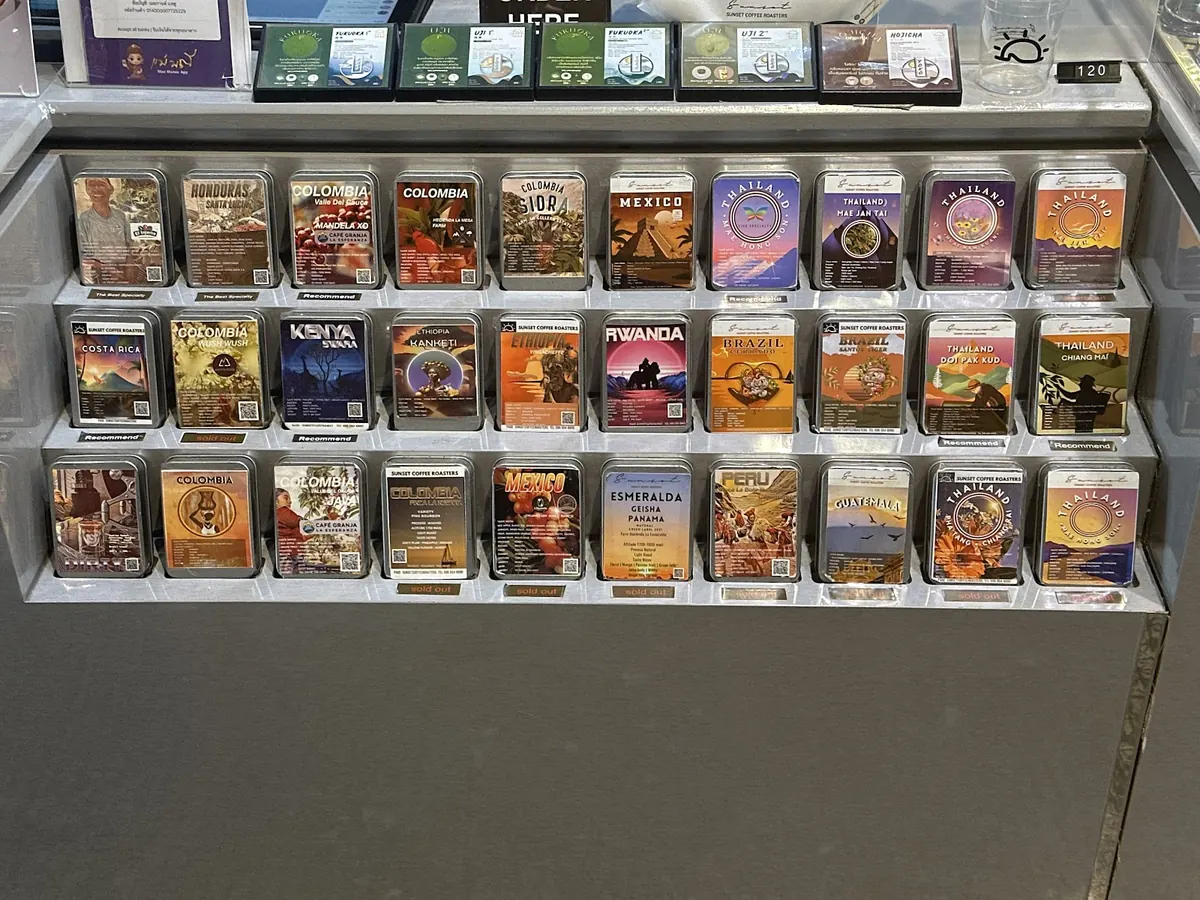
Sunset Coffee Roasters is the larger, more polished operation, and busy enough that consistency matters more than novelty. It delivers: a well-pulled flat white, a decent bakery counter, and doors open at seven. The fruit-forward signature drinks divide people, so order a classic first and experiment on the second visit.
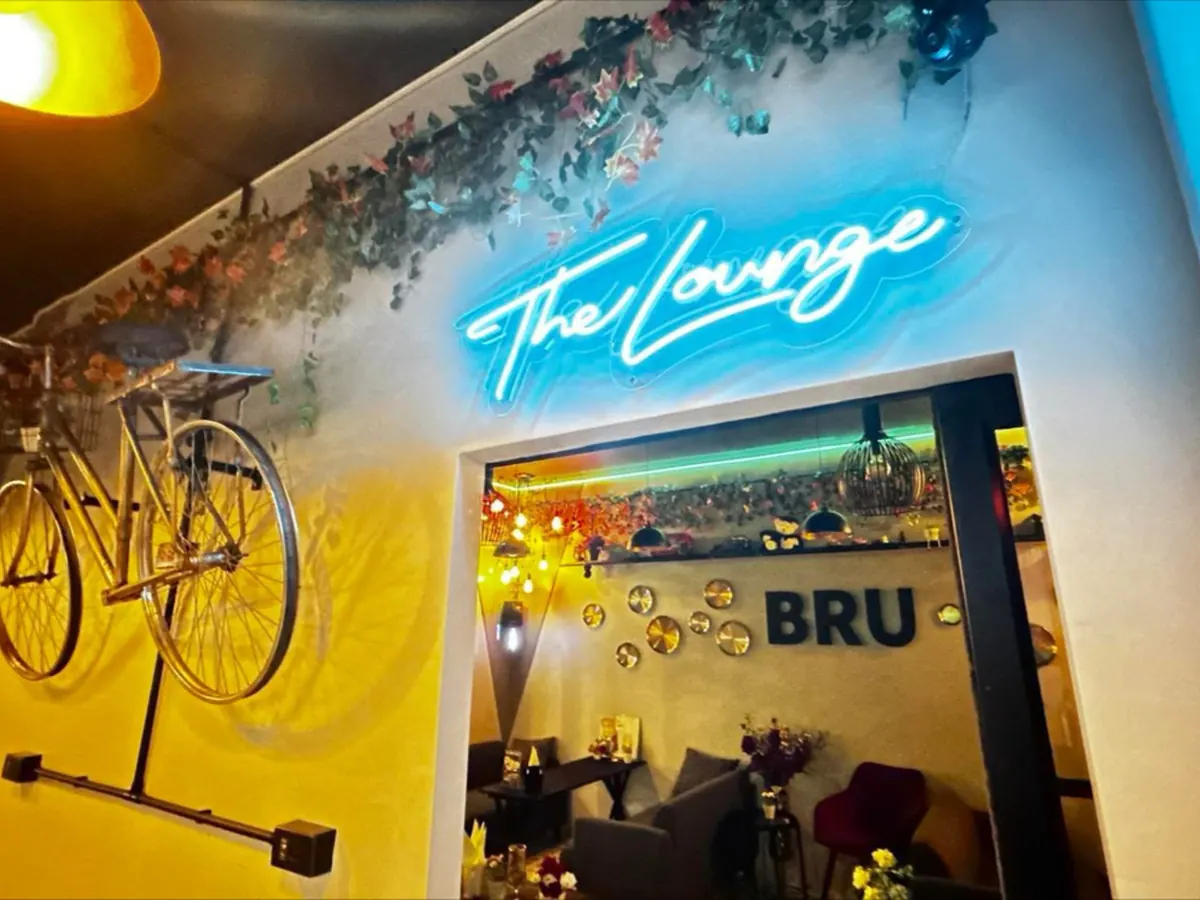
BRU Coffee & Bar sits out on Siam Country Club Road on the east side, which makes it a destination rather than a passing stop, and it is better for that. The exterior is understated to the point of being easy to drive past; the room inside is usually calm when the rest of Pattaya is not. Coffee is the centre of it and treated seriously. The food is the surprise, with sandwiches built properly rather than assembled and a pastry counter worth arriving hungry for. There is a bar list alongside the coffee menu if the day has moved on.
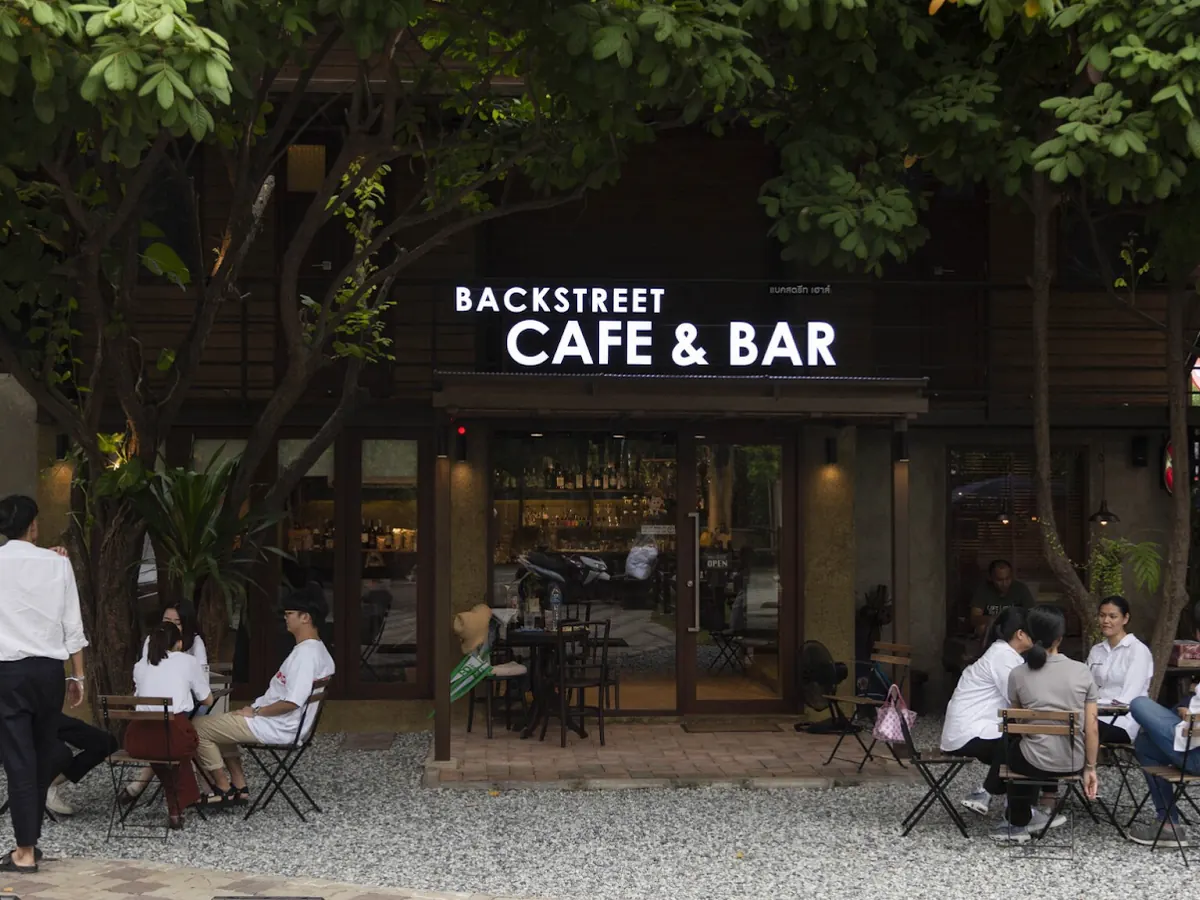
Backstreet House is the outlier. A large shaded garden down an unpromising lane in North Pattaya, with more outdoor seating than most cafés here have floor space, jazz at a conversational volume, coffee roasted on site, and a shift to cocktails as the afternoon goes on. Being trapped there by an afternoon storm is not a hardship.
How to order
Thai café menus have their own conventions, and knowing three of them saves confusion.
Iced by default. Most Thai customers drink coffee cold, and in this climate that is entirely rational. If you want it hot, say so, because "latte" without qualification will often arrive iced.
Sweet by default. Many iced drinks come pre-sweetened with syrup or condensed milk. Ask for wan noi (a little sweet) or mai sai nam tan (no sugar) if that is not what you want.
Oliang and cha yen are not coffee shop coffee. Oliang is traditional Thai iced coffee, dark and often cut with other roasted grains; cha yen is Thai iced tea. Both are excellent and both are their own thing rather than a version of espresso.
For specialty rooms, ordering is much the same as anywhere: espresso, flat white, filter or pour-over, and a question about which origin is on today.
The chains, and when they are the right answer
Café Amazon is everywhere, attached to petrol stations and shopping centres, and is the default coffee stop for most Thai people. It is consistent, cheap and unremarkable. On a road trip it is exactly what you want.
Starbucks, Coffee World and the mall chains do what they do. Nobody needs a guide for that.
The point of this list is what they are not.
Working from a café
Pattaya is a reasonable place to work remotely and the constraint is rarely WiFi, which is fast and cheap across Thailand. It is power, seating and whether anyone minds you staying.
Albatross and Sunset both open early enough to get a full morning in before the heat. Backstreet House has the space and the shade for a long session and nobody rushes you.
Two habits worth adopting. Ask before assuming an outlet is available, because many Thai cafés have them but not at every table. And buy something every couple of hours; it is the unspoken rent.
Taking beans home
Several of the roasteries here sell retail bags, and Thai single origins from Chiang Rai, Doi Chaang and Doi Tung are genuinely worth carrying back. Ask for the roast date rather than a best-before, and buy whole bean if you can grind at home.
If you are travelling on, beans survive a suitcase far better than most food souvenirs and make a much better gift than the alternative.
One honest caveat
The specialty scene here is small and it moves. Cafés open and close, owners sell up, and a room that was excellent last year can be ordinary this year under new management. Everything on this list has been consistent for a while, but a coffee scene this size is never entirely stable.
If a place has changed hands since you read this, the three signals at the top of the page will still tell you within about four minutes whether to stay.
A short history of Thai coffee
This is worth knowing because it changes what you order.
Arabica arrived in northern Thailand properly in the 1970s, as part of the royal development projects that replaced opium cultivation in the hills with alternative crops. Coffee turned out to suit the altitude and climate around Chiang Rai, Chiang Mai and Mae Hong Son, and the industry grew from there.
For decades most of it was sold as commodity coffee, roasted dark and sold cheap. The change came in the last fifteen years, as a generation of Thai producers and roasters started treating the crop the way specialty producers elsewhere do: single estates, processed carefully, roasted light enough to taste of where they came from.
Doi Chaang and Doi Tung are the names most people recognise, but there are dozens of small estates now, and the good ones compete internationally.
Robusta is grown in the south and mostly goes into instant coffee and traditional Thai iced coffee.
What to ask for
At a specialty bar, the useful question is simply "what's on filter today?" Any room worth its equipment will have an answer, and usually an opinion.
If you want to taste what Thai coffee can do, ask specifically for a Thai single origin on filter rather than espresso. Light-roasted northern Thai arabica tends toward stone fruit, citrus and florals, and it disappears under milk.
If you want something cold that is not a milkshake, ask for iced filter or a cold brew rather than an iced latte.
Where the scene is going
The specialty scene here is small but growing, and it is following the same path Bangkok took a decade ago: a handful of serious roasteries first, then the cafés that buy from them, then the customers who know the difference.
What Pattaya still lacks compared with Bangkok or Chiang Mai is depth. There are perhaps a dozen genuinely serious rooms, not fifty, and several of the best are inconveniently placed for visitors staying on the beach.
That is changing, and the east side is where most of the new openings are.
Cafés as an afternoon
One thing worth saying: café culture here is not the fifteen-minute transaction it is in much of Europe. Rooms are built for sitting in, nobody hurries you, and the air conditioning is a genuine amenity in this climate.
Treating a café as a destination for two hours rather than a stop for ten minutes is how most residents use them, and it is the better way to do it.
Common questions
- Where can I find specialty coffee in Pattaya?
- You can find specialty coffee at roasteries such as Albatross Coffee Roasters, SQUID COFFEE, Sunset Coffee Roasters, BRU Coffee & Bar, and Backstreet House.
- How should I order coffee in Pattaya cafés if I don't want it sweet or iced?
- Most Thai cafés serve coffee iced and sweet by default. To request hot coffee, specify "hot"; for less sugar, ask for "wan noi"; and for no sugar, say "mai sai nam tan."
- What are the characteristics of good specialty coffee shops in Pattaya?
- Good specialty coffee shops either roast their own beans or source from a known roaster, offer genuinely light-roasted single origin filter coffee, and often have owners who are knowledgeable and enthusiastic about their coffee.
Places in this guide
cafes
Albatross Coffee Roasters
Light roasts done properly, with the sea across the road.
cafes
SQUID COFFEE
Competition-level espresso, tuned group by group.
cafes
BRU Coffee & Bar
Considered coffee and properly made food, away from the beach entirely.
cafes
Backstreet House
A garden down an alley, coffee by day and cocktails after dark.
cafes
Sunset Coffee Roasters
The flagship roastery, open at seven.
Related guides
- Living HereWhere to actually get work done in PattayaFast internet, real power sockets and coffee worth the trip. The rooms that hold up for a full working morning.
- Trip PlanningPattaya for solo travellersOne of the easiest cities in Asia to arrive in alone. Where to stay, how to meet people without it being a drinking session, and eating alone without ceremony.
- Living HereEating and drinking around Lake MabprachanTen minutes inland from the beach, Pattaya's east side has quietly become the best place in the city to eat if you are not chasing a sea view.
Browse every topic in our Pattaya guides, or ask the Pattaya AI Guide about anything in this guide.