

Guide
Driving in Pattaya: scooters, cars and what can go wrong
Renting is easy, cheap and the single most common way visitors get into serious trouble here. What to check, what to refuse, and what to do after an accident.
8 min readUpdated
Good to know
- What to bring
- To ride a motorbike legally, you need an International Driving Permit issued alongside a valid home licence with the correct category on it.
- Getting around
- Baht buses cover the main routes along Beach Road, Second Road and out to Jomtien; sit in the back and press the buzzer to stop.
- Good to know
- Do not leave your passport as a deposit for a rental; offer a cash deposit or a photocopy and use a different shop if they insist.
- Opening hours
- For medical attention, Bangkok Hospital Pattaya runs around the clock with an international patient department and direct billing with most travel insurers.
Renting a scooter in Pattaya takes about four minutes and often requires nothing more than handing over a passport. That ease is the problem. Road accidents are the leading cause of serious injury and death among foreign visitors in Thailand, and the majority involve motorbikes.
None of what follows is an argument against driving here. It is an argument for doing it with your eyes open.
The licence question, answered properly
This is where most people go wrong, and the consequences are financial rather than legal.
To ride a motorbike legally in Thailand you need a licence that covers motorbikes. For a visitor, that generally means an International Driving Permit issued alongside a valid home licence with the correct category on it. A car licence does not cover a motorbike. An IDP with only the car category does not cover a motorbike.
Rental shops will rent to you regardless. Their willingness to hand over a bike is not a statement about your legal position.
Why it matters more than the fine. Police checkpoints do issue on-the-spot fines for riding without the correct licence, and those are an inconvenience. The real exposure is insurance. Most travel and health insurance policies exclude claims arising from riding a motorbike without the appropriate licence, and many exclude riding without a helmet regardless of licence. An uninsured hospital stay after a serious accident is a genuinely life-altering bill.
Check your own policy wording before you rent anything. Not the summary, the wording.
Scooter rental: what to check
Photograph and video everything before you ride away. Every panel, both sides, the seat, the wheels, the exhaust. Do it slowly, visibly, in front of the person renting to you. This single habit prevents the most common dispute in Thai tourist areas, where existing damage is attributed to the renter on return.
Do not leave your passport as a deposit. This is a widespread practice and a bad idea. Your passport is the document you need to leave the country, extend a stay, or deal with any official problem. Offer a cash deposit or a photocopy instead. If the shop insists on the original, use a different shop.
Check the brakes, the tyres and the lights before leaving. Front and rear brakes, tread depth, indicators, and the horn, which you will use more than you expect.
Ask what insurance the bike carries. Many rentals carry only the compulsory minimum, which covers very little. Some shops offer additional cover. Understand which you have.
Take the shop's phone number and note where the shop is.
Riding here
Thai traffic follows conventions rather than rules, and they are learnable but they are not the ones you know.
Traffic is left-hand drive, which catches out visitors from mainland Europe and the Americas in the first ten minutes.
Bigger vehicles have de facto priority. This is not the law but it is the reality, and arguing with a pickup truck is a losing position.
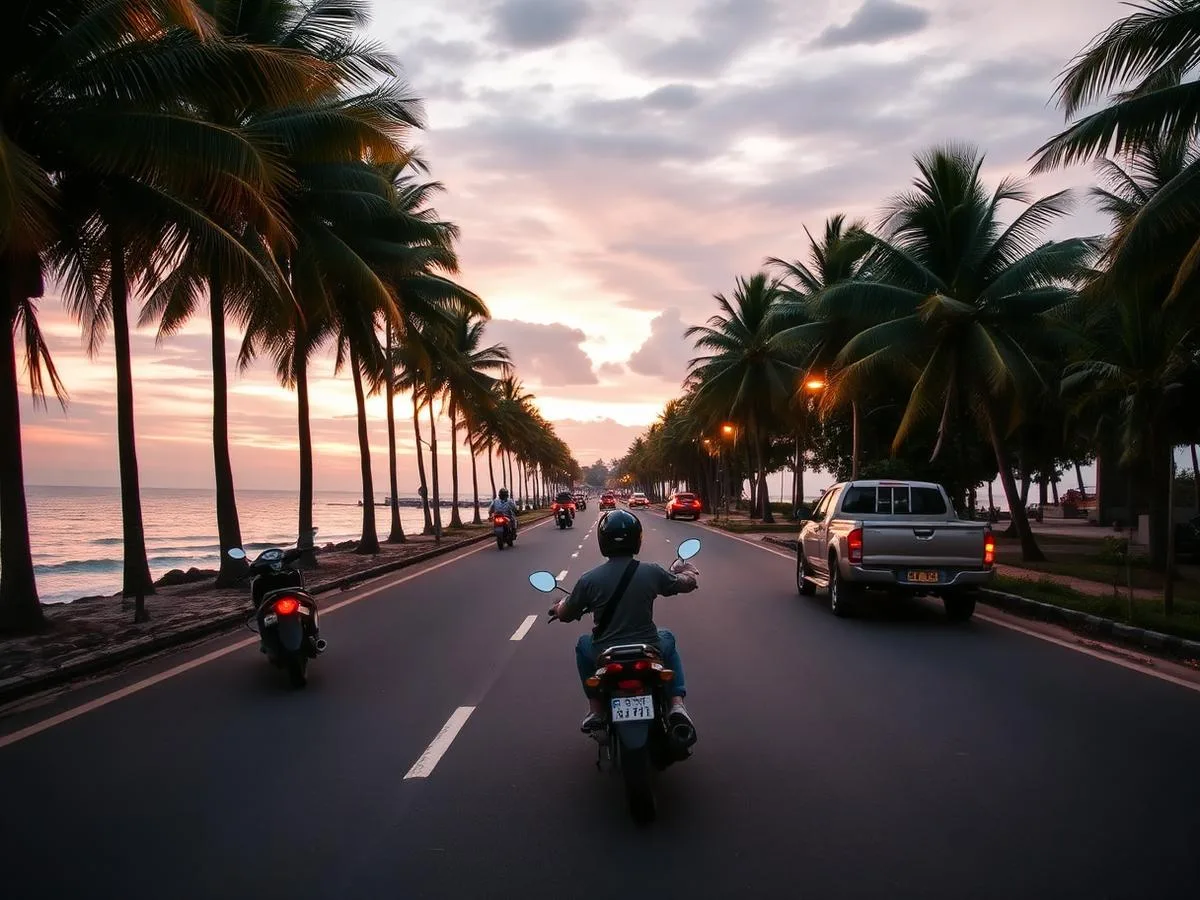
Undertaking, filtering and riding on the hard shoulder are all normal. Expect motorbikes to appear from any direction, including against the flow of traffic on the inside.
Turning traffic often crosses in front of you rather than waiting. Watch the front wheels of vehicles rather than the driver.
Sand and water are the two things that put people down. Sand collects on bends near the beach, and the first rain after a dry spell lifts oil to the surface. Both are far more dangerous than the traffic.
Helmets are legally required, routinely checked at police stops, and the difference between a bad week and a catastrophic one. Wear one that fits and fasten it.
Night riding is materially more dangerous. Unlit vehicles, poor street lighting outside the main roads, and a significantly higher proportion of drunk drivers.
Renting a car
Considerably safer, considerably more comfortable in the heat, and the right choice if you are staying on the east side or travelling with family.
Use an established rental company rather than a roadside operation, and read what the insurance excess actually is.
An IDP with the car category plus your home licence is the standard requirement.
Parking is generally easy outside the beachfront strip, and both malls have large car parks.
Traffic is manageable by Bangkok standards. The pinch points are Sukhumvit at rush hour and the beach road in high season.
Driving a car opens up the parts of the region that are genuinely worth the trip: the courses inland, the coast south toward Sattahip, the restaurants around Lake Mabprachan.
If you have an accident
This is the section worth reading before you need it.
Do not move the vehicles if anyone is injured or if there is any dispute about fault. Thai insurance assessment often depends on vehicle position.
Call the police, and call your insurer's local number if you have one. For anything involving injury, call emergency services.
Do not admit fault at the scene, and do not agree a cash settlement on the roadside before you understand what you are agreeing to. This is common and it frequently disadvantages the foreign party.
Photograph everything: positions, damage, the road, the other vehicle's plate, and the other party's licence if they will show it.
Get medical attention even for apparently minor injuries. Bangkok Hospital Pattaya runs around the clock with an international patient department and direct billing with most travel insurers. Save the number before you need it.
Foreigners are frequently assumed to be at fault in informal roadside resolutions, regardless of what happened. A police report protects you.
The alternatives worth considering
Baht buses cover the main routes along Beach Road, Second Road and out to Jomtien for very little. Sit in the back, press the buzzer, pay at the window. Do not negotiate a destination with the driver unless you want private-hire pricing.
Ride-hailing works across the city, removes negotiation entirely, and is the right answer for anything after dark or off the main loops.
Walking is fine along the beachfront and unpleasant almost everywhere else.
For most visitors on a one or two week trip, the combination of baht buses and ride-hailing covers everything, costs little, and removes the risk entirely.
The honest position
Plenty of people ride here for years without incident, and a scooter genuinely is the most practical way to get around the east side and the wider region.
But the specific combination that hurts foreign visitors is consistent and avoidable: an unfamiliar bike, on the wrong side of the road, without the correct licence, without a helmet, often after a drink, on a road with sand on the bend.
If you are not already a confident motorcyclist at home, Pattaya is not the place to become one. Rent a car, or use the apps.
Fuel, parking and the small stuff
Fuel stations are plentiful and mostly attended, so you do not pump your own. Say the amount or ask for a full tank. Scooters take very little and the cost is negligible.
Parking for scooters is generally informal and free, though beach road areas have marked zones. Cars park easily outside the beachfront strip, and both malls have large car parks.
Petrol stations are also rest stops in Thailand, with coffee, toilets and often a small food court. On any drive out of the city they are the natural break.
Toll roads exist on the motorway route toward Bangkok, and tolls are paid in cash at booths. Keep small notes accessible.
Police checkpoints
Routine, common, and not something to be alarmed by.
Checkpoints appear on main roads and are frequently set up to check helmets and licences on motorbikes. The process is straightforward: stop when directed, produce your licence and the bike's documents, and be polite.
If you do not have the correct licence, expect a fine. It is issued as a ticket, and the amount is set rather than negotiable. Paying it is the end of the matter.
The behaviour that turns a routine stop into a problem is arguing, raising your voice, or refusing to cooperate. Stay calm, smile, and deal with it.
Long drives from Pattaya
Once you have a car, the region opens up considerably, and the roads are generally good.
South toward Sattahip and Rayong is the most rewarding drive, with the coastline improving as you go and far less traffic than the Bangkok direction.
Inland toward the reservoirs and hills gives you a completely different landscape within an hour.
North to Bangkok is motorway most of the way and predictable outside peak times.
Two things to plan for. Thai drivers overtake in places that would surprise you, so leave more space than feels necessary. And rural roads at night have unlit vehicles, animals and pedestrians on them.
Insurance, in plain terms
Worth separating out, because the words on a policy matter more than the price.
Compulsory third-party insurance attaches to the vehicle and covers very little. Most rentals carry only this.
Additional rental insurance may be offered and is worth understanding: what the excess is, what it excludes, and whether it covers the rider or only the machine.
Your travel insurance is the one that matters for medical costs, and it is where the exclusions bite. Common ones include riding without the correct licence category, riding without a helmet, riding above a certain engine size, and any incident involving alcohol.
Read the policy wording rather than the summary page, and if the wording is ambiguous, email the insurer and keep the reply.
Common questions
- What is the legal requirement for a visitor to ride a motorbike in Thailand?
- To legally ride a motorbike in Thailand, a visitor generally needs an International Driving Permit (IDP) issued alongside a valid home licence that has the correct motorbike category. A standard car licence or an IDP with only a car category is insufficient.
- What precautions should I take when renting a scooter in Pattaya?
- Before riding, photograph and video the scooter to document its condition, do not leave your passport as a deposit, and check the brakes, tyres, and lights. Also, ask about the bike's insurance coverage and note the rental shop's phone number and location.
- What should I do if I am involved in a scooter or car accident in Pattaya?
- Do not move the vehicles if there are injuries or disputes about fault, call the police and your insurer, and do not admit fault or agree to a cash settlement at the scene. Photograph everything, get medical attention, and remember that a police report protects you.
Places in this guide
Related guides
- Getting AroundGetting around PattayaBaht buses, ride-hailing, scooters and when to just walk. What each one is actually for, and the pricing trap that catches almost everyone.
- Living HereBuying a condo in Pattaya: what to check before you commitA practical checklist for foreign buyers. What documents matter, what the ongoing costs are, and the questions that separate a good purchase from an expensive lesson.
- Getting AroundGetting to Pattaya from Bangkok and the airportsTwo airports, four realistic routes, and the one that is right depends entirely on your luggage, your budget and what time you land.
Browse every topic in our Pattaya guides, or ask the Pattaya AI Guide about anything in this guide.