

Guide
Learning Thai in Pattaya
Why bothering to learn Thai changes life in Pattaya more than almost anything else, and where to actually study, from language schools to self-taught basics.
7 min readPublished
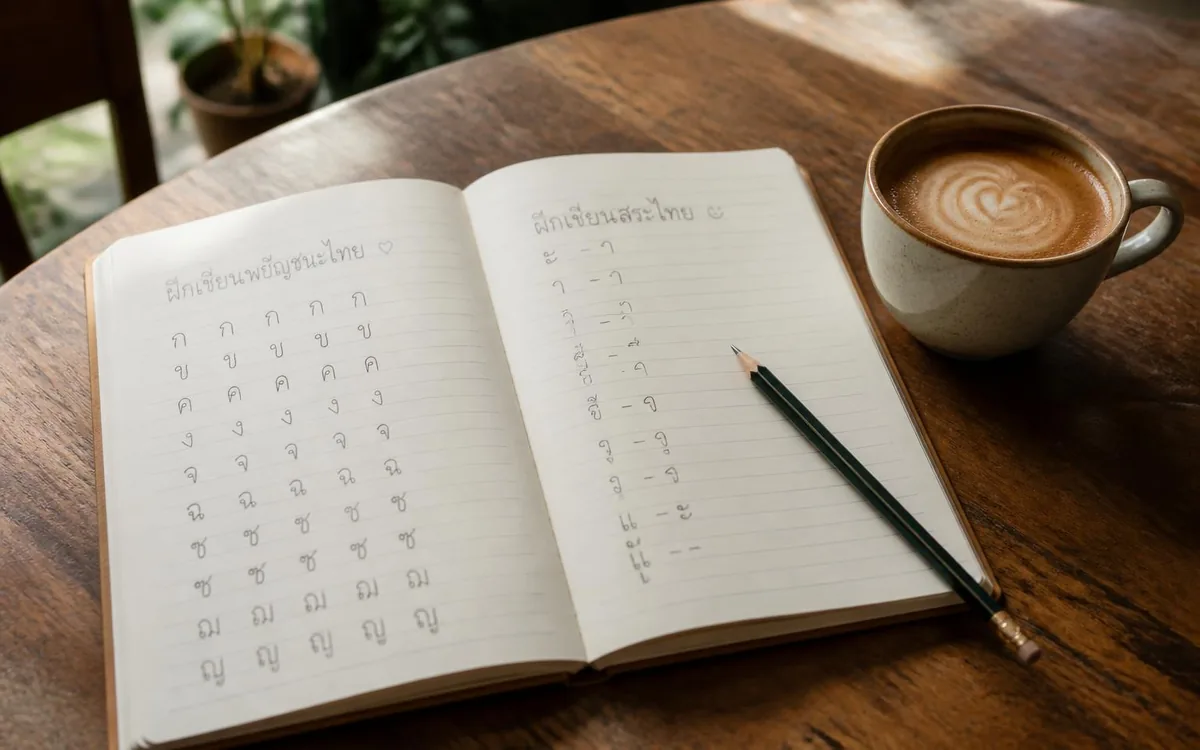
Illustration: The Pattaya Guide
You can live in Pattaya for years on English alone. Plenty of people do. But learning even a modest amount of Thai changes the texture of daily life here more than almost anything else you could spend the same hours on, and it is one of the most consistently underrated investments a long-term resident can make.
This guide covers both routes: structured classes at an actual language school, and the self-taught approach for anyone who wants to start before committing to a course, or instead of one.
Why it''s worth doing, honestly
The practical argument first. Thai people, consistently and without exception in our experience, respond differently to a foreigner who makes a genuine effort to speak Thai, even badly, than to one who doesn''t try at all. This shows up in small ways: better service, more patience with mistakes, a warmth that is hard to describe but easy to notice once you''ve experienced both sides of it. It also solves real problems: dealing with a landlord, a mechanic, a local clinic, or immigration paperwork becomes dramatically easier once you can follow a conversation even partially, rather than relying entirely on translation apps or hoping someone nearby speaks English.
The honest counter-argument: Thai is genuinely difficult for English speakers, more so than most European languages, because of its tonal system, a completely different script, and grammar that doesn''t map neatly onto English patterns. Fluency is a multi-year project for almost everyone who isn''t starting with an existing tonal-language background. But functional conversational Thai, enough to order food, negotiate a price, chat with a taxi driver, or handle basic admin, is realistically achievable within a few months of consistent effort, and that level alone delivers most of the practical benefit.
Language schools in Pattaya
Pro Language School, with an office on Central Pattaya Road, is one of the larger and more established options, with a track record specifically among the resident foreign community and additional corporate training services for companies in the wider Chonburi area. Reviews consistently mention the quality of one-on-one instruction over group classes.
PLC (Pattaya School of Languages and Computers), established in 1998 and licensed by the Thai Ministry of Education, is one of the older schools in the city with ISO certification for its teaching standards. A safe, established choice for anyone who wants a school with genuine institutional history.
Walen International School, on Soi Yume (Soi Paniad Chang), offers Thai alongside English, French, Chinese, and Russian, and has built a reputation on a fairly unusual satisfaction guarantee: if you can show a lesson genuinely wasn''t worth the money, they won''t charge for it.
Progress Language School, on North Pattaya Road, focuses specifically on Thai, Russian, and English, with group and private options across beginner through advanced levels, and is well regarded among the city''s substantial Russian-speaking resident population specifically.
Easy ABC Language School, on Thappraya Road between South Pattaya and Jomtien, teaches Thai alongside English, German, and computer courses, and is positioned conveniently on the baht bus route for anyone based in Jomtien.
Salisa Language School runs a specific short-stay programme aimed at visitors as much as residents: three hours of Thai language and culture instruction each morning for four weeks, leaving afternoons free, with basic accommodation nearby included in the package. A genuinely different format from the standard evening-class model, worth considering if you''re in Pattaya for an extended holiday rather than living here full time.
Most schools offer both group classes and private one-on-one lessons, with private lessons costing more per hour but generally producing faster, more targeted progress, especially for anyone whose schedule doesn''t fit neatly around fixed group class times.
Education visas and language schools
A number of Pattaya''s language schools also offer visa sponsorship support for students enrolling in longer courses, since studying Thai at a registered school is one of the recognised paths to a Non-Immigrant ED visa. If this is part of your reason for enrolling, confirm the school is properly licensed for visa sponsorship and understand the attendance requirements before signing up, since these visas come with real obligations around minimum class hours and reporting.
Learning on your own
If a formal school doesn''t suit your schedule or budget, self-study is a genuinely viable path to functional conversational Thai, particularly for anyone with some discipline and daily consistency. A few things worth knowing before you start.
Tones matter more than anything else at the beginning. Thai is a tonal language with five tones, and getting the tone wrong changes the meaning of a word entirely rather than just sounding like an accent. Spend real time on tone recognition before worrying about vocabulary size; a small vocabulary spoken with correct tones communicates far better than a large one spoken flat.
The script is worth learning, eventually, even if you delay it. Many self-taught learners skip reading and writing entirely and rely on romanised transliteration, which works for basic speaking but caps your progress and makes menus, signs, and messages permanently opaque. It is a genuinely useful long-term investment, even if you start with spoken Thai first.
Apps and structured courses fill the gap between lessons. Whether or not you''re also taking formal classes, daily practice through language apps, podcasts aimed at Thai learners, or simply structured vocabulary review keeps momentum between sessions, which matters more for tonal languages than most, since inconsistent practice makes tones harder to internalise.
Real conversation practice beats app practice. At some point, the fastest progress comes from actually speaking with Thai people who are patient with a learner, whether that''s staff at a regular café, a language exchange partner, or simply making the deliberate choice to order in Thai even when it''s slower and more awkward than switching to English.
A realistic path
For most people settling in Pattaya long-term, a combination works best: a few months of structured classes to build correct pronunciation and grammar fundamentals early, followed by ongoing self-directed practice and real-world conversation to build vocabulary and fluency over time. Trying to skip the early formal instruction and go entirely self-taught tends to bake in pronunciation habits that are harder to correct later; trying to rely on classes alone without daily real-world practice tends to produce students who can pass a classroom test but freeze in an actual conversation. The combination, imperfect and unglamorous as it is, is what actually works for most long-term residents who end up genuinely functional in Thai.
Common questions
- Is it hard for English speakers to learn Thai?
- Yes, more so than most European languages, mainly because of the tonal system and a different script. Functional conversational Thai is realistically achievable within a few months of consistent effort, but fluency is a multi-year project for most learners.
- Do I need to learn to read Thai script?
- Not immediately, but it's a worthwhile long-term investment. Many learners start with spoken Thai using romanised transliteration and add the script later, though this caps how far you can progress with menus, signs, and written messages.
- Can I get a visa through studying Thai in Pattaya?
- Some language schools offer sponsorship for a Non-Immigrant ED visa for students enrolled in longer courses. Confirm the school's licensing and the attendance requirements before enrolling if this is part of your plan.
- How much do private Thai lessons cost in Pattaya?
- Pricing varies by school and whether you choose group or one-on-one lessons, with private lessons costing more per hour but generally producing faster progress. Contact schools directly for current rates.Not yet verified. Prices in Thailand change without notice, treat this as a guide, not a quote.
- What's the fastest way to make progress in spoken Thai?
- Getting tones right early, then combining structured lessons with regular real-world conversation practice, rather than relying on classroom instruction or self-study apps alone.
Related guides
- Living HereBuying a condo in Pattaya: what to check before you commitA practical checklist for foreign buyers. What documents matter, what the ongoing costs are, and the questions that separate a good purchase from an expensive lesson.
- Living HereExpat groceries in Pattaya: where to actually shopWhere to actually find the imported cheese, the proper bacon, and the coffee beans you can't get at 7-Eleven. A realistic guide to grocery shopping as a long-term resident.
- Living HereInsurance in Pattaya: what visitors and residents actually needTravel insurance, long-stay health cover, and the visa insurance requirements that catch people out. What actually matters and where to check the current rules.
Browse every topic in our Pattaya guides, or ask the Pattaya AI Guide about anything in this guide.